WK4DS Amateur Radio Blog
Search Posts
The weather can be fickle…
We went to my local park (K-2169) to do a little POTA and to enjoy the nice weather there.

I setup at the canyon rim today in the shade and got my rig setup in my usual tree and everything. I look on the web and the MUF showed that 17 meters was open and I dialed around and did hear stations so that was promising. I tuned up the antenna on an open frequency and started calling CQ…and called and called …and called. No one answered my calls for something like 10 straight minutes. I even had someone respot me once but never heard anyone on the air
I even took a few minutes to confirm that the Ten Tec Argonaut 5 and the Ten Tec 277 Antenna tuner were set correctly with my nanoVNA. They were in fact set correctly…so I just wasn’t being heard on 17 meters. Probably because I am only using 15 watts from the Argonaut. Maybe because the band sucked like a Hoover vacuum cleaner that day, who knows…


This antenna tuner is the Ten Tec 277. It has options to connect a COAX to an antenna, a balanced line to the antenna and even a random wire input (which is what I was using on this day) The variety of connections is what led me to acquire it in the first place, I like the ability to use it with any antenna I have and it works quite well in that role. It is easy to tune and the SWR meter works well too. I don’t use it as a traditional SWR meter though, I use it to watch for changes in the antenna system. If the SWR starts to climb then I know something is changing and I need to look into it, I have had things like the counterpoise wire break in the crimp lug before and not realize it due to it being inside the heat shrink tubing and this meter showed it to me. It also works for tuning purposes if I forget my nanoVNA as well.
My nanoVNA kit is almost entirely adapters and the tiny little VNA over to the side. I love this device and wonder how I got along without one before.

Anyway, back to that activation on that day. Since17 meters was apparently turned off by this point, it was with a heavy heart that I QSY-ed to 40 meters. I tuned up and started calling on this band and it didn’t take long to get someone in the log. After getting quite a few “locals” on 40 meters, I shifted my focus up to 20 meters. For me with my low antennas in park activations I will normally get closer states on 40 meters and more distant stations on 20 meters and higher. That is one of the reasons I like 17 and 15 so much. When they are open I have had great performance with DX stations. If you look at the map below, the close in contacts are all the 40 meter contacts and some of the closer ones are 20 meters.


I just love maps like this one where there is this one lone QSO way off.
It was about this time that the storm clouds really started to look ominous on the western horizon. But they didn’t really seem to be moving closer so I kept going. Well, 20 meters was open is all I can say. My very first QSO on 20 meters was with G3WPF in the UK! I actually thought he was an American station and I was missing the first letter so I had him repeat it a couple of times…lol. I am glad he didnt give up as I figured it out finally and got him in the log. What an awesome way to hop on 20 meters with! DX right out of the chute!!!

As can be seen from the logbook, I had a decent run on 20 meters before two things happened at basically the same time. The storm started to move into the area, and another ham tuned up on top of me and I couldn’t hear stations anymore. I chalk it up to them not being able to hear me as I was only 15 watts into a random wire pretty low to the ground. Anyway, that was enough to get me to call QRT and pack it all up before it got wet.


Until next time I hope to hear you on the air!
de WK4DS 72
Overcast POTA activation strikes gold!
So today was a good day for POTA. I did some small work related items, grabbed the Ten Tec Argonaut 5 and headed to Cloudland to get an activation in before lunch. Before I even setup on frequency I was dial-ing around on 17 meters to check the band and found G3VBS calling CQ with no takers! So I figure, why not see if he can hear me… turns out 20 watts was plenty to make a contact with England and we had a great chat for quite a few minutes with only a little QSB.

Today I setup at the frisbee golf course parking area as it is the highest part of the park as well as the quietest RF wise. The lower lot has a nicer view but with the proximity to the campground and so many more people in general, it tends to be noisy comparatively.

Something else I like about the upper lot is I can either deploy the setup in the photo above or I can string a wire in a tree as well. Rigging the hamsticks in the lower lot is more difficult to say the least. So I was a little worried about the impending rain that was on the radar, I normally use the setup you see as I can sit in the truck and operate even in the rain. This is really nice as even inclement weather cant stop my POTA activations! Haha.

Well sure enough when I got home, it started raining so I made a good call here.

I did setup on the bed cover though, which is a little exposed but I figured I could move it into the truck pretty fast should it start to rain.

Today’s radio is the Ten Tec Argonaut 5 which is a wonderful little portable HF transceiver. It is larger than the TR-35 but it also has multiple modes and has every HF band available as well. Today I started on 17 meters because… why not? And that is where I heard G3VBS. I figured I would secure the activation with ease after having a great QSO with the UK. I couldn’t have been further from the truth. I only made one more contact on 17 before giving up and moving to 20 meters. Once on 20 meters things started to pick up for me.

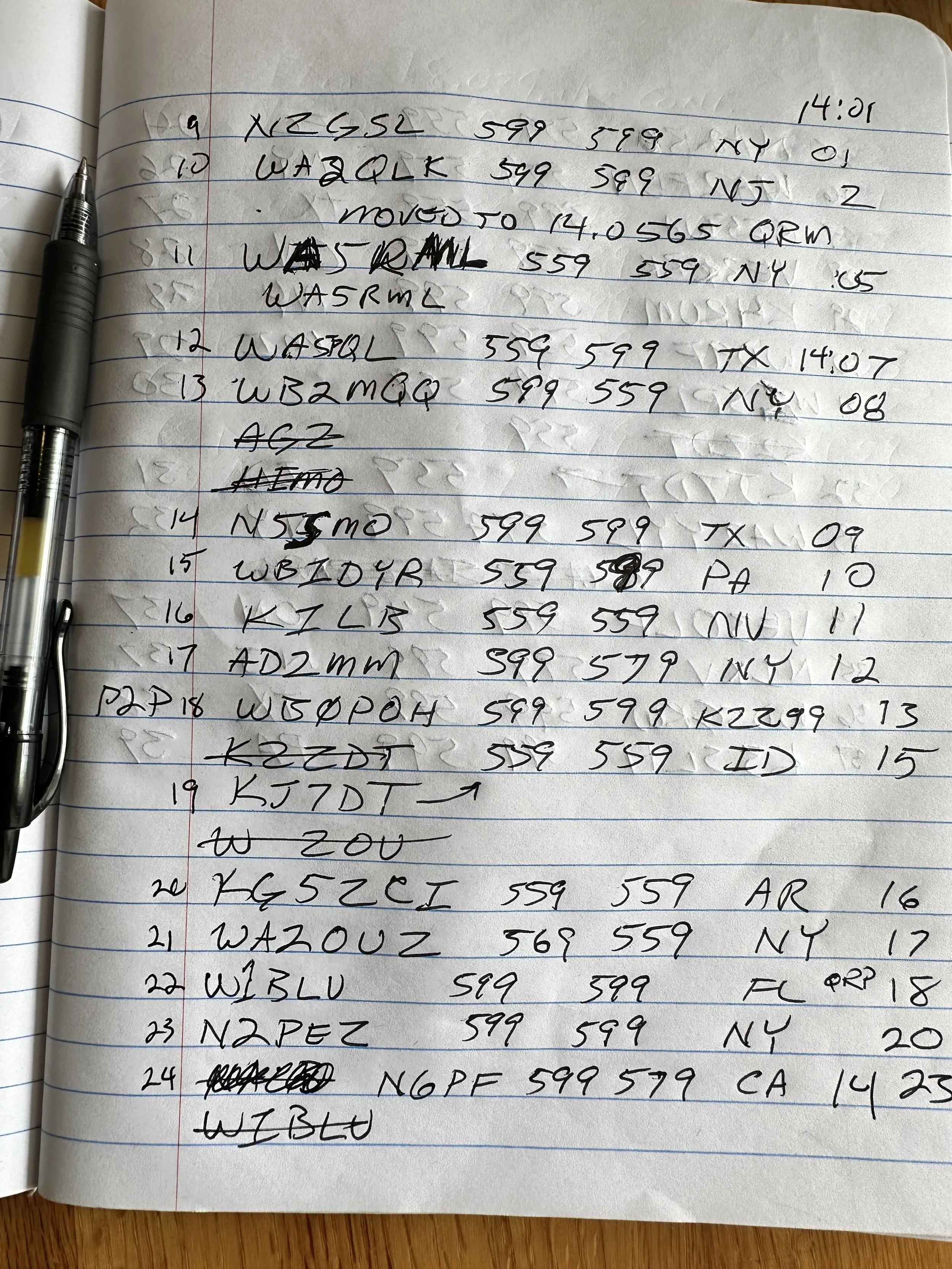

There were a couple of pretty strong pile ups at times and it was fairly difficult to dig out a sinlge call. Mainly because most of the stations were zero beat with me. This makes all the signals turn into one large tone and I get garbled info. Luckily, I have learned a couple of tricks around this and can work with most people now. I will simple call W? Or if I get part of a Canadian call, VE? You get the point. This is a tried and true trick of pile up runners (did I just make up a new term? LOL) around the world. When you cant make out anything, just ask for the most common prefix you know and someone will reply. It worked well for me today as I was able to break apart the pile up and get every one into the log that I could hear. I even worked 4 or 5 stations after calling QRT as they were asking and I had time. I ended up with 36 QSOs toward my day as I had one dupe so it was a great day for POTA. If you want to know more about POTA just give it a google search and head over to their website. Until later, 73 de WK4DS
Component failure sucks…
When things dont go right it can be frustrating but when things are like my activation recently they are downright demoralizing…

So I had an evening free and wanted to do some POTA so I decide to setup in the truck with my hamsticks … since it is faster… you know since everything is ready to go. Little did I know what I was about to get into.
So I goto the frisbee golf parking area and get everything out to do an in-truck activation. This is how I operate if it is raining and has worked well for me in the past. I just tape a “rain shield” to the coax connector made from a peanut package with both ends cut out. Haha, reuse at its finest. But today, I didnt need it since it was not raining.

Next I break out the Ten Tec Argonaut 5 and my N3ZN cw key and connect it with my HamGadgets PicoKeyer and I am all set. Another thing with today is I planned to activate with my 8Ah LiFePO4 battery to see if it can handle an activation with the Argonaut 5. I have my inline power meter this time so I can monitor the voltage too. I also can monitor Amp/hour usage but completely forgot to do this since I got wrapped up in other things. I setup this kit in the cab of the truck as you see so that I could sit comfortably while being in the truck. This works really well when I am solo, but gets tougher if I bring someone with me. As you can see below it was up to almost 3 Ah by the time I took this photo. I wished I had thought to get a photo of it at the end to have that data. I guess I will have to do it again… lol.

But before all this got started I connected my antenna and wanted to check the SWR before starting as I have been experimenting with the radials some here lately and have learned some interesting things about them. I get out my nanoVNA and connect it to the antenna and it shows like it isn’t there…at all. I mess with the VNA a while and try to see if it might have a loose adapter on the VNA or if the calibration might have been done wrong, which I found not to be the case after calibrating it again… Nothing in the VNA was wrong, so I get out of the truck and inspect the antenna and it looks right, nothing is out of the ordinary. I go back and get my trusty little multimeter and decide to ohm the center pin of the coax to the shield to see what it measures, it should be open to the meter…it isn’t, quite the opposite actually, it is shorted. So I immediately go to the antenna and disconnect my brand new, reputable brand coax and check it with it removed from the antenna, it measures good now. Whew! That was close! I didn’t want my new coax to be bad right out of the chute.

So now that I am pretty sure it isn’t the coax, I turn my attention to the antenna. I remove the radiator and test the base to center pin and it reads shorted!! What in the world is going on here!?!? I look closely at the mount, which at this point has the BNC to PL259 adapter on it and nothing else and so I remove the top portion of the antenna mount to make sure water has not entered the plate where it passed through and has created a path with corrosion to the mount. Nope, not there, it looks perfect.

So I remove the adapter and the short goes away immediately. I reinstall it and it returns. I remove the adapter and check it and it measures fine and so does the antenna mount now. What gives? Well, I had a new adapter I picked up at the hamfest from the Wireman and I just installed it to see what would happen. The problem vanished. I tried wiggling the antenna and the coax and pushed and pulled on the adapter and the meter didn’t change a bit, all I can figure is that something in the other adapter is shorting when the adapter bottoms out on the antenna mount at the point where it gets tight.

This is what went bad. On the surface from every angle it looks perfect, but when tightened in place it produces a dead short across the antenna to ground. Don’t blindly think that simple things like this can’t fail. Obviously they can. I will be more diligent in checking my system routinely too. The Argonaut 5 has no SWR meter on it, which is pretty much the only thing about it I don’t like, so I have to use other means of monitoring the SWR. The VNA was that tool today.


Once that was sorted out, I was able to get on the air and make some contacts. Since I was dancing with the end of the UTC day, I figured I would start on 20 meters to improve my odds of getting an activation before the day flips over. The hunters came in clutch and I EASILY made the activation. Once I cleared all the calling stations, I QSYed to 17 meters to see what I could do there as the band was open earlier…before I found the bad antenna adapter…
Turns out 17 meters right during grey line to the west coast will net some cool contacts. All but one are from the west coast and that is always fun as I rarely get to work California due to noise on the bands. All in all, I netted 41 contacts in the log all before the UTC day ended. So it all worked out anyway. Moral to the story is two fold. The first one is to take extra parts for your system and two is don’t assume anything… this adapter looked perfect visually but did not work when installed. Have fun y’all and I hope to hear you on the air soon.


PS: Another perk to working POTA is things like these photos I grabbed of the clouds. You normally don’t see these at home in the house. If I had stayed home or threw in the towel on the antenna (which I almost did) I would not have seen these beautiful sunset clouds.
73 de WK4DS
15 meter POTA activation with DX!
Today I went to K-2169 (Cloudland Canyon State Park) and setup my Ten Tec Argonaut 5 and proceeded to work 15 meters with the intent to not get on 20 meters at all. (I did wander down to 17 meters but not till I had secured the activation on 15 meters first.) I just enjoy the pursuit of the higher bands for some reason. I really like to work 15 meters in particular and I have no good reason why either… I pulled the wire up into a tree in an almost vertical orientation but it could still be called a sloper if you held you head right. Probably a 60 degree angle sloper, but it was up in the tree and the 13’ counter poise was 90 degrees to it.

The view from my operating position never gets old. I love activating this park with the view and the tree canopy giving almost perpetual shade it makes for a wonderful location almost all year round.

This is the view directly behind me. There was a fairly lively family reunion or some such happening in this shelter. I had to turn up the volume a couple of times to be able to hear over them. LOL. This is also one of the reasons I like the location I am at, should it start to rain, I can just unhook the antenna wire and battery and basically carry the radio and tuner to the shelter in just seconds.

Once again, the Ten Tec Argonaut 5 was front and center. I have really grow to love this little radio. I can see why they have such a cult following, the receiver is great, the filters are simple to use and effective, the radio has minimal menu options that mainly follow the “set n forget” ideology, What’s not to love for a CW op? I think going forward this will be my main POTA radio for ops where I am near the truck and I will use the Penntek TR-35 for backpack ops due to its small size.

Another thing I did today was bring one of my large keys, this one has been out of the house several times already so it is no stranger to a picnic table. It is my prototype CW key I made many years ago, it works wonderfully too. I actually use it more than the newer model I made later that is still on the bench connected to the Omni 6+…
I am also using the HamGadgets keyer I picked up off of eBay a while back. This little keyer is the reason I now like using the Argonaut 5 on activations. The Argonaut doesn’t have memories in the keyer, so you have to pound out every bit of the code you send with it. This allows me to record some messages like my CQ and such so I can just hit a button and send the whole call for POTA.

Here we have something that a lot of people gloss over. Fuses. Also note that I have the battery connected to the input fuse and I deliberately chose the 10 amp fuse for the Argonaut since it is only 20 watts out. I need to take my inline meter and see what the draw is on dead key and adjust accordingly but for now I know the battery and radio are fuse protected like this. Don’t neglect to add fuses to your portable system, it still matters as much as at home. This is not a name brand fuse bank either which means I wont load it as heavy as they advertise, we all know these are built to the edge of spec anyway.

I wanted to show the case I transport the radio in. This is some sort of surplus military case that we picked up as Huntsville Hamfest last year for really reasonable money. A little cutting here and there and some new closed cell foam and contact adhesive and we have a case to carry the Argonaut 5 and a MFJ antenna tuner with a wire antenna connection input on it as well. You can see the tuner still in the case as I was using my Ten Tec tuner today since it was in the box with the antenna.


Well, I got on the air today on 15 meters and heard a good bit of band activity and so I figured I would check the POTA spots to see who all was on 15…turns out I was the only one on 15 meters on the spot page. I didn’t check it after that for a while but when I did there still wasn’t anyone other than me that was there. I don’t know why other than the QSB (fading) that was happening. You can see the timestamps in my log where I would go 3 or 4 four minutes without so much as a call and then I would get several in a row. You can also see from the signal reports that when they did come in, they came in strong! As I was working through a tiny pile up with NK8O and VE3CT I could hear a weak station near the noise. Once I cleared the other two stations I could hear YS1MS coming out a little louder now! I was stoked to get central America in the log today! Yeah, I know the Oregon call was probably further away, but I got a DX call in the log from El Salvador today!!! WooHoo! When 15 is open is goes WAY out there! KJ7DT came booming in to me right off the bat. Man I love this hobby!

So it seemed that 15 meters started to close or something as I went several minutes without a call so I decided to tune up on 17 meters and see what I could scratch up. Well, 17 did not disappoint. I worked several stations fairly quickly and I could tell that I was on a lower band than before as the station that was coming in loud on 15 that was kind of near me (N2DI) was weaker on 17 meters. I actually worked several hams on both bands today, which is always awesome. But I did notice several hams from out west were on 17 but not 15 meters. You will notice two Idaho stations, two Utah stations and a Arizona station. It was almost like the signal on 15 hopped right over these guys or they don’t have a 15 meter antenna…who knows to be honest. Anyway at about 21:43 UTC I hit a little pileup of 3 or 4 stations and once again started pulling the callsigns out one at a time. I kept hearing this station down near the noise, but it was solid, just the other stations were a lot louder and I could copy them easier so I went ahead and worked them out. Then I started pulling out the call. I got the number right away, it was a 1 and I knew I had heard the CC at the end…what was that first letter again? W? No, that isn’t right. “UR CALL?” J… It was a J callsign!!! I have never worked a Japan call before, I have never honestly heard a Japan ham loud enough to be able to make a QSO with them, I have heard them before but they were down in the noise. This one was weak, but clearly I could hear the call. J…H…1…O…C…C… YES, it was Japan!!! I couldn’t believe it when he gave me a 539 with my compromise antenna and 20 watts of power! I was on cloud nine for a few minutes after this. I even bragged to my buddies about it. It was a great day today. I had hoped to work a few J calls while I was in Hawaii, but never heard one while I was there. That is just how it goes…lol.

I ended up with 29 QSOs in the log today which is a great day as it means I secured the activation as I worked several DX stations to boot. What is your favorite DX station you have worked while operation portable or picnic table mobile or some such?
73 WK4DS
222mhz Repeater upgrades for better reliability.
When KG4WBI decides to do something, he does it right. So we finally got a stable repeater operating at the repeater site. It has a little bit of a hot receiver, but it is working so we are not complaining.

Above you can see the new and improved KG4WBI 1.25m repeater in operation! This system works like a charm and we have been happily giving it a good work out ever since he built this out.
Up till recently we have been using an old GE Master II (2 meter repeater) that has been retuned to work on 1.25 meters. This was apparently no small feat either as there were extensive notes about what had to be done and all the new information was written out meticulously. This was nice as we soon ran into a problem with it due to the old solder joints and corroded connectors were making it have a plethora of problems. We would chase one down and get it fixed only to find another one a day or two later. What clued us in that we had a good location for the repeater though was that we had found out that we had been talking on the repeater with the finals shut down so it was literally transmitting with the preamp, we found it in the manual and it was something like 90mW if I remember right. I can be wrong here, but that is what I think it was… needless to say it wasn’t much, and were able to ragchew on it and have a great time for the most part. So the tuned repeater antenna up 50 feet above the grade on the brow of the mountain was an excellent location.

Here you have yours truly putting the coax on the wall with plastic “one hole” style tie downs. We wanted to do this so that it wouldn’t risk crushing the coax as we tighten it down.
Well the preamp finally went out too and we actually had to shut the repeater down for a while till we could go work on it. So we get a day and go trouble shoot on it a while and the problem comes and goes while we are there looking at it and the silly thing even juiced up the PA for a few minutes to full output while were testing into a dummy load. Then it all went out again and there was nothing we could do without an oscilloscope to check for signal. At this point we shut it back off and go home to look at oscilloscopes to see what we could find that would work up to 250mhz…

In the mean time, Roger gets out a couple of mobile 222 radios he has and orders a Hamgadgets repeater controller off the interwebs. He then proceeds to build a working repeater out of these two radios with only a couple of slight modifications and just goes to the site and temporarily connects them to the existing duplexer and powers the system on. It takes him a few minutes to get a few of the settings right and BAM! The KG4WBI 1.25m repeater is back on the air! These radios work surprisingly well too. We ran it like that for a few weeks with the radios laying on a 5 gallon bucket if memory serves. Well, once we figure out that these radios work fine in this role, we decided to make the install a little more permanent and get all the repeater parts out of his son’s way so he can work on cars again… lol. You see, his son wants his garage back so he can tinker on project cars…

The antenna is sitting on top of a 48’ push up pole that we guyed too to the site once we got it raised just to eliminate any chance of wind blowing it over. The power supply below was chosen for the main power supply should we choose to run it on mains again directly at some point. So this is here for that expansion should we choose to do it.

Instead we chose the route below. We have a 10 amp smart battery charger wired to these batteries and since we are only running 25 watts, the whole thing only draw about 7 or 8 amps on transmit. I want to say we tested it and measured right at 7 amps on transmit, but this means that if the power fails for any reason, this repeater will not miss a beat for many hours. something on the order of 30 straight hours of transmit… Which means in reality it will last 2 or three days of casual use before the batteries expire. By then we will have been able to take some solar cells to the site or even a small generator should we want it to stay online past that. Most power outages for us in this area will last less than one full day so this means we should never have the repeater go offline for power failure 99% of the time.

As you can see above, Roger also installed a copious amount of these RFI chokes on the power wires everywhere! These work reasonably well and are really easy to install so there isn’t really a reason not to take the precaution and use a few of them. We were hoping to suppress and RFI coming out of the smart charger and as far as we can tell, either the charger has good radio noise suppression or these chokes did the trick…or a combination thereof.

Below you can see one of Roger’s experiments. This is part of the “if one is good then two is better” plan. He is testing how clean the skirts are with the smaller duplexer wired in series with the larger one. It has incredible sensitivity on receive without even a hint of the transmitter RF in it. I think this actually worked… Out of this duplexer you see the coax going into the lightening protector which is grounded with that huge ground wire you see in the photo. The coax then comes out of the lightening arrestor and heads out to the antenna with LMR 400 DB.

I just wanted to share something about ham radio that wasn’t a POTA activation for a change… lol. Thanks for reading along and 73
WK4DS - David
2023 Huntsville Hamfest from the view of a vendor this time!!!
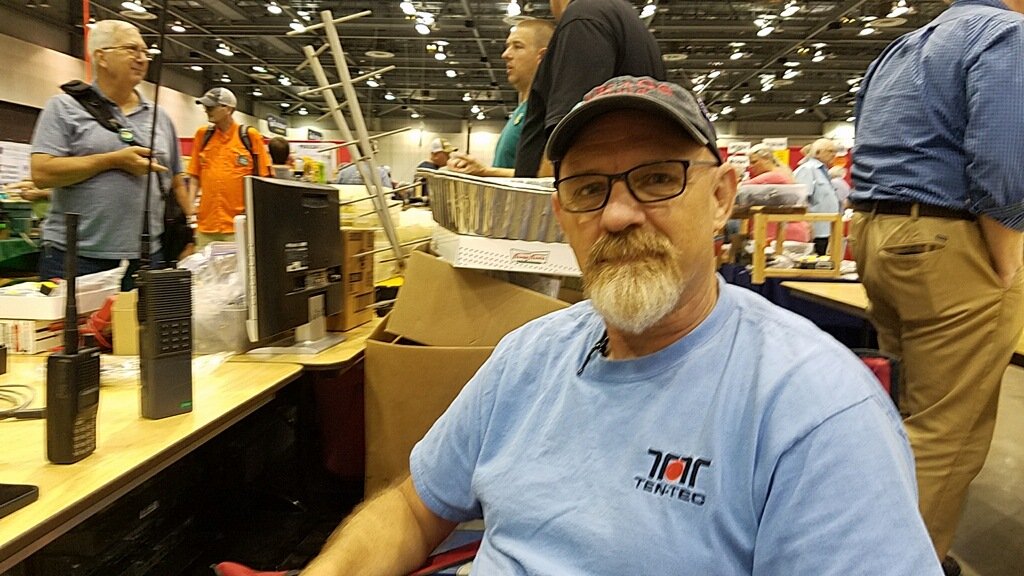
Man time flies! It has already been a year since me and Trey had come over and bought all those military surplus cases and stuff! I cant understand how that has happened…
Anyway, I signed up for a table in the “bone yard” which is indoors at Huntsville, which is nice since it means it is out of the direct sun in August and has air conditioning. Well Trey arrives the day of the event and I already have my stuff int he truck, we just load a couple things he is bringing and we are off.
Side notes: Check out the vintage Ten Tec t-shirt I only get out for this and sometimes Field Day, I am probably the only person alive who still has one. I am also monitoring two ham bands here, our 2 meter simplex frequency and our 1.25 meter simplex frequency, We used both over the course of the day to make contact with friends. Back to the story already in progress…
We get to the convention center right on time and find a huge line of cars waiting to get into the show area. Once we work our way through the line we figure out these people are parking in the underground parking lot and we need to go to the back to unload the truck, well we get out of line, unload the truck and setup in short order. I can tell already it is going to be a good show for me when I can’t even get the truck parked before Trey (who went with the stuff to the table) is already being pummeled by dealers wanting to buy my stuff! This is a good sign!
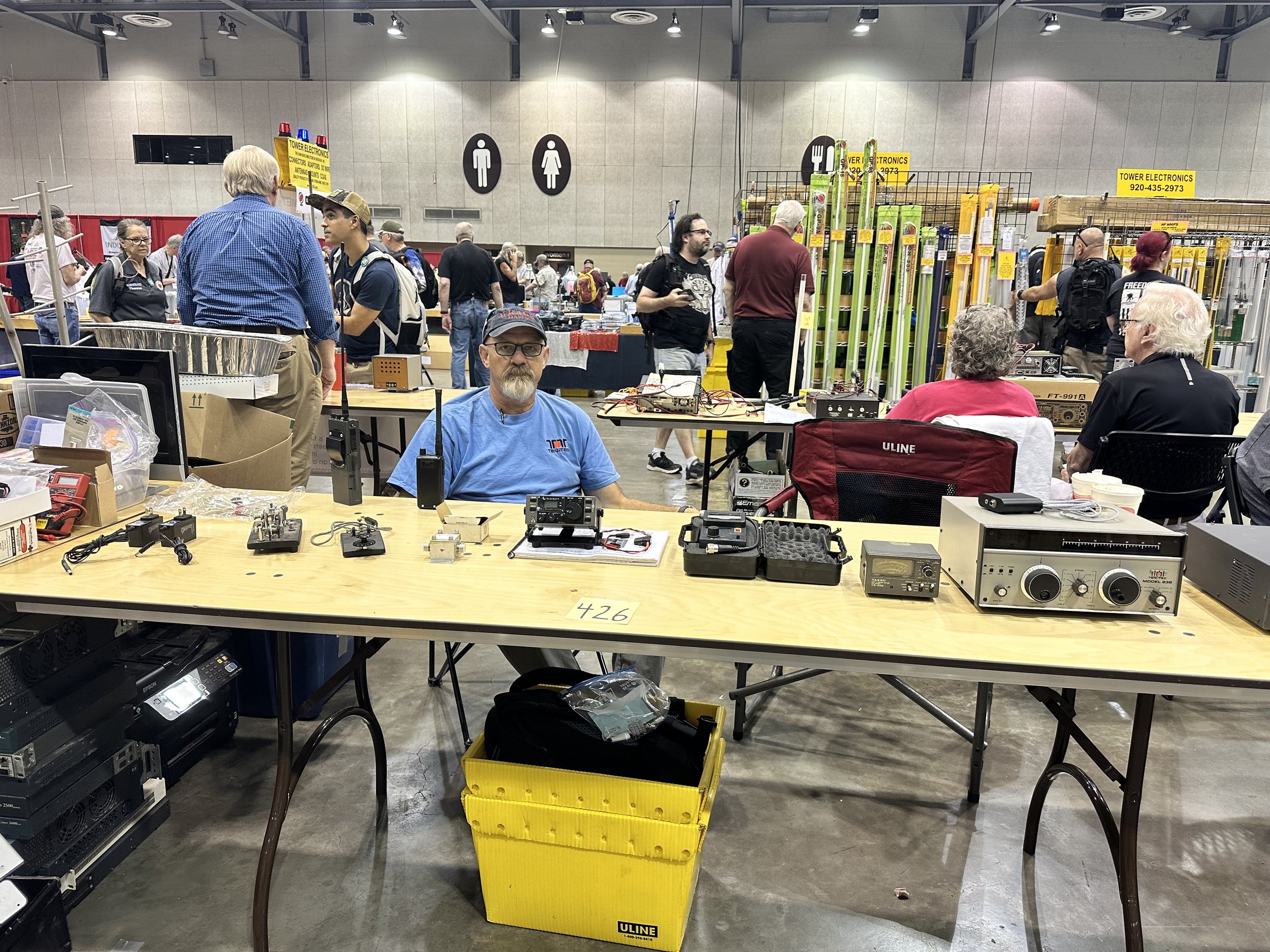
By the time this photo was taken, the Icom IC 705 and tuner were sold. It literally lasted 5 minutes. this is good as the proceeds from the sale of this radio went to purchase the sBitx radio that I want for POTA instead. I had also already sold one of the two power supplies I took over as well. Common items seem to have went really fast to be honest.

Here, Trey (KG4WBI) Is getting settled in for the long arduous day of minding the table. Also, at this point I still had the Elecraft K1 pictured here as well. More on this radio later.

Once the doors opened, it was a free for all till about lunch time. It was REALLY crowded with so many people that it was hard to imagine the total number of participants. Everybody seemed to have a radio, even the little kids!

Things moved off of the table steadily all morning though and I had high hopes that I would actually achieve my goal of not taking any of it home with me! Each little item, one by one, would get picked up and bought by some enterprising person looking for the find of the day. I was happy to help them too.

After lunch I made my way over to the POTA table and grabbed a photo for the blog, they were pretty busy so I didn’t bother them with my shenanigans but left them to inform the youth about the wonders of ham radio. While out on my stroll I did check on a couple of items I was looking for and stopped to play with the N3ZN keys for a minute as they are SWEEEEET! Then it was back to the grind of tending “shop”…

I continued to see the stuff I didn’t use goto new homes one at a time till I was down to the K1, the Ten Tec 238 tuner and the Comet Antenna Analyzer. Then the strangest thing happened. I had to goto the bathroom. Well, that wasnt really all that odd, but what was happening at the table was. Turns out Josh from Ham Radio Crash Course had sent out scouts looking for a K1 or a K2 and they found mine and told him. He was livestreaming the event too! Well, he finds the table and makes his way over to it to find Trey minding the booth in my absence. You can actually watch his stream and see the whole thing transpire, just fast forward to about the 18 minute mark to see where it all starts.

A little back story here. I love the little K1, it was a favorite of mine for many years and I have used it off and on for that time. I just took a long hard look at the gear in the shack and realized the K1 sits on a shelf WAY more than not and I needed it to goto a good home where it would see more air time. So with a little sadness, I packed it up to goto the hamfest to find a new home. I get attached to things like this way to much and this is an exercise in decluttering my life, I wanted to move out a ton of gear and not just throw it away or such but turn it into something I would use instead. The K1 is just a plain fun radio to use, hence the pain in seeing it leave. I believe Josh will do a wonderful job at this and look forward to seeing the little K1 on his youtube channel soon.
It was great interacting with him and getting to chat for a minute, he took it straight way over to the test bench and had them check it for operation and he was happy it worked as advertised, All of this is also in the livestream…lol.

Then I had one more trek around a little to pick up a few items I have been looking for and actually found. I got a coax and some connectors from the Wire Man, I got the drop-in desk charger for my old Icom HT I have been using lately and it even came with a working radio! So now I have two!!! HAHA, why did I come to the hamfest again??? Then I bought a cable from another cable builder, ABR Industries, and I must say they look really good, I wanted a new coax for my POTA work and he builds his with common mode chokes built into the cable, that is really nice and i am looking forward to testing this cable on the nanoVNA to see how it compares to my homebrew chokes I made.
Then the finale of the day came when I went back over to N3ZN’s booth and talked to him about a small POTA key. The next thing I know, I bought one!

This key is tiny, at about 1.5” by 1.5”, it will be an awesome POTA key. I am going to look into how I plan to use it and expect there to be blog posts coming soon about it. I also got to talk to the man himself while he filed out my ticket on it and he is an amazing guy, I count it as a blessing to have met him. Hopefully we will cross paths again soon. If I get the chance I want to share with him my keys I built back in the day, we talked for a while and he is one of the few people that can actually appreciate the work that went into making them.

In closing I wanted to share a photo of my current dream rig, the Elecraft K4 with or without the amplifier, I just want the radio to be honest. At some point I will upgrade from the aging Ten Tec radios in my shack and this is probably what will replace them. I love everything about this radio and quietly take a peek at it when I am at the hamfest, but for now, there is POTA to do and contacts to make with the gear I have!
PS: All I brought home was the antenna analyzer and the Ten Tec tuner, both of which I dont mind holding on to for a while longer…
73
WK4DS-David
Activating a park on the side of the road.

I have been here before but never setup like this. K-0716 has park boundaries in both Georgia as well as Tennessee. I have activated both states with this park and have found this to be a great spot for a simple activation when time is short since the pull-off area is inside the park boundary itself. There is also a parking lot at the top of the quarry too and I will use it next time as I think it will be a little bit less exposed as well as I think I can get a wire up in a tree there. This location is called Eagles Nest and is a rock quarry probably used when the old Wauhatchie road was built back in the day, I couldn’t find any reference to the name of the place online, but it has this huge NPS sign so it is a thing…lol.

Today saw use of my trusty 20 meter ham-stick and the single 20 meter tuned counterpoise wire. I ran the counterpoise over to a large rock and draped the weight over it so that it kept the wire taught. This made setup pretty fast and simple, I was on the air in no time really. Although I did start out with the external speaker on my power pack for audio, I quickly realized the error of my way as the traffic was going by on the other side of the truck and made copy difficult at best. So I switched to my ear-buds and suddenly was able to copy all sorts of stations I couldn’t hear before!

I am pretty sure this forms an elevated counterpoise system and makes the antenna work better than laying the counterpoise on the ground…

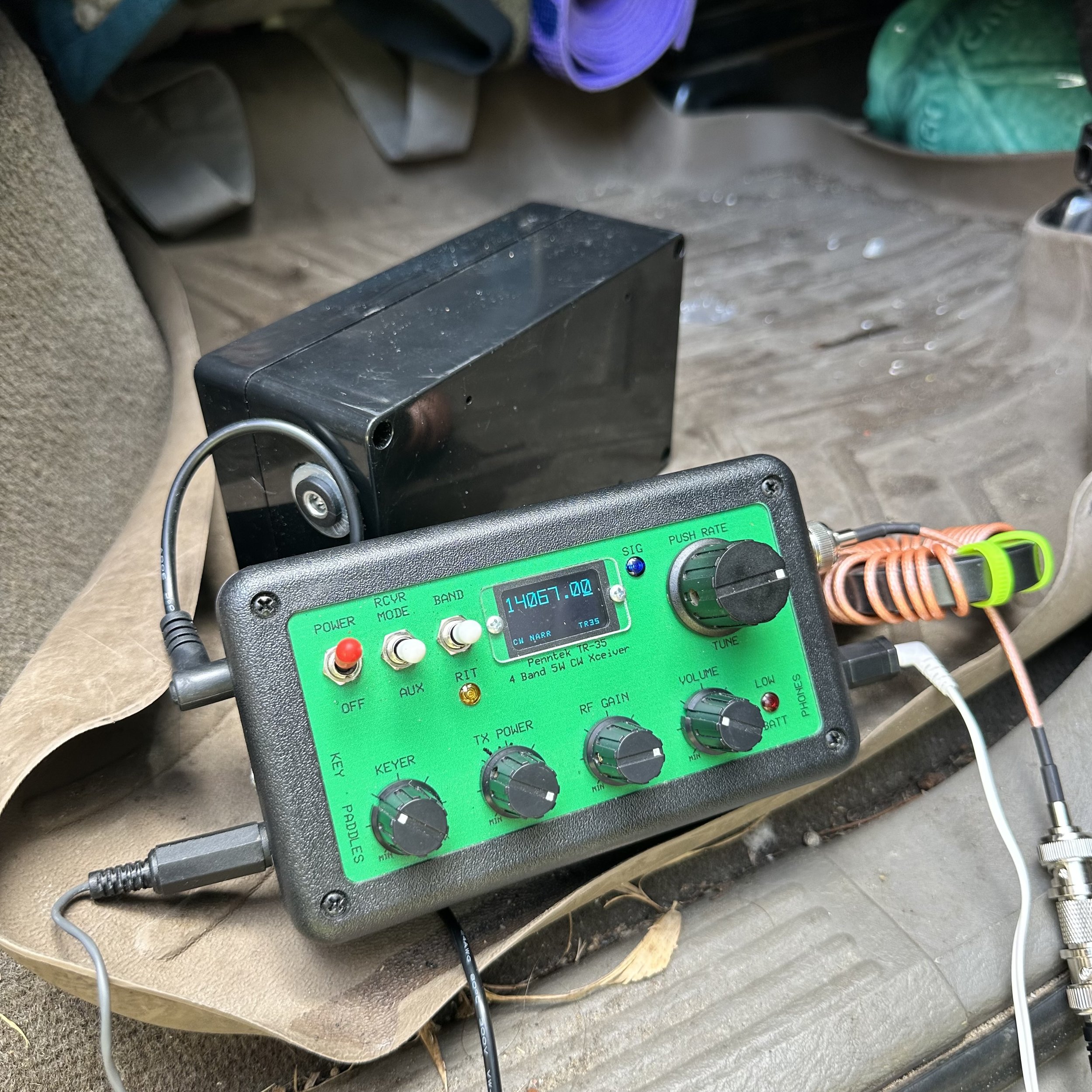
The station today was setup in the rear floorboard of the truck and I was using the power pack I built containing a 3Ah Bioenno battery. I just used it to prop up the radio so I could see the display are reach the Aux switch for memory keying.
There was a little QSB on the bands today, but for the most part they were open really good, I was able to get runs of 10 minutes at times with strong signals coming in and I was even getting decent reports back to me. for the most part. But what was strange was that after I worked N9EDL it was like the band just closed or something, I called CQ for 10 or 15 minutes without so much as a peep coming back to me. It was like someone just turned the switch off… Then again the last 5 or so in the log are starting to spread out more than the previous contacts so it might have just been a deep null in propagation and if I had stuck it out it would have come back.

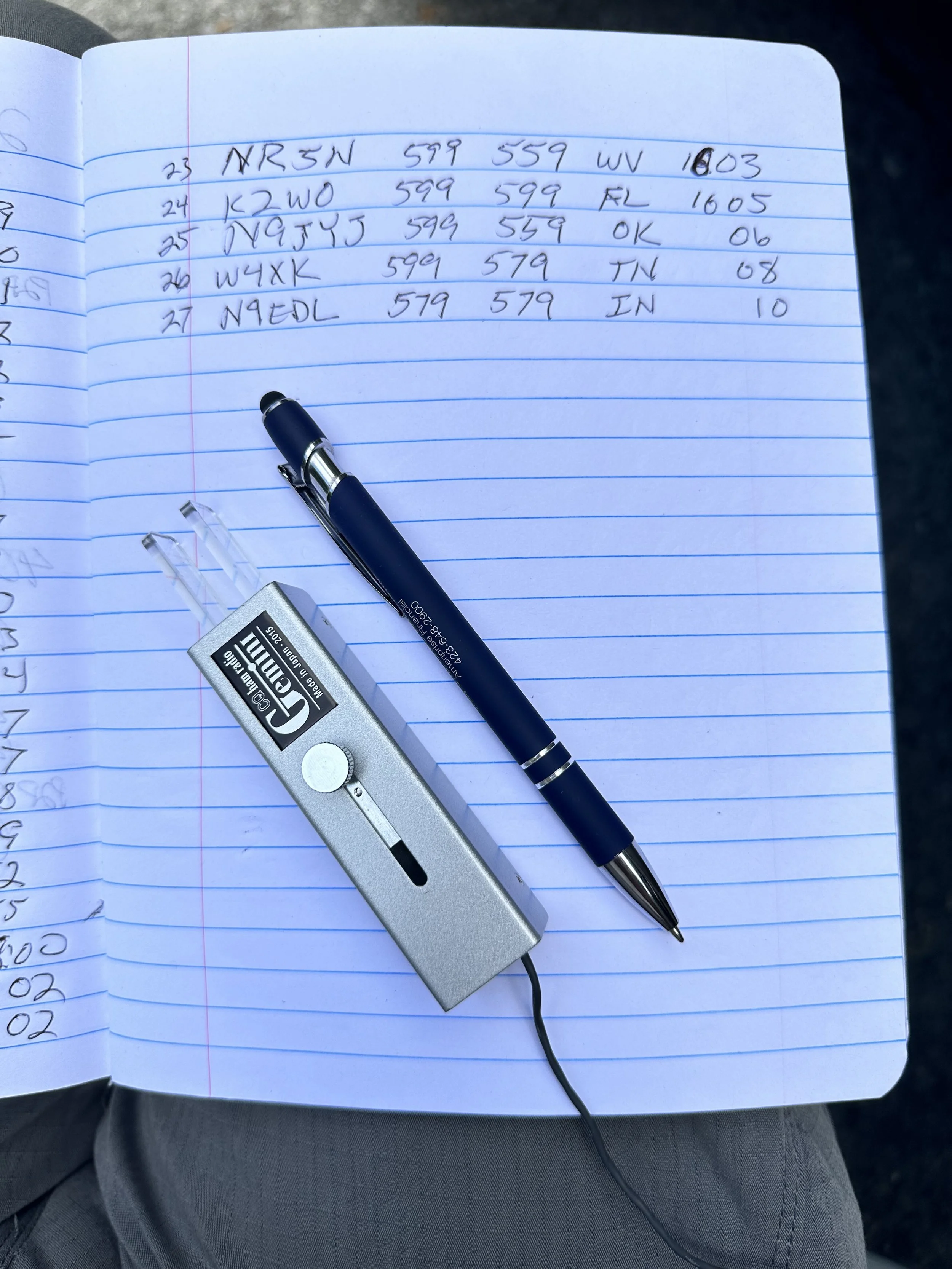
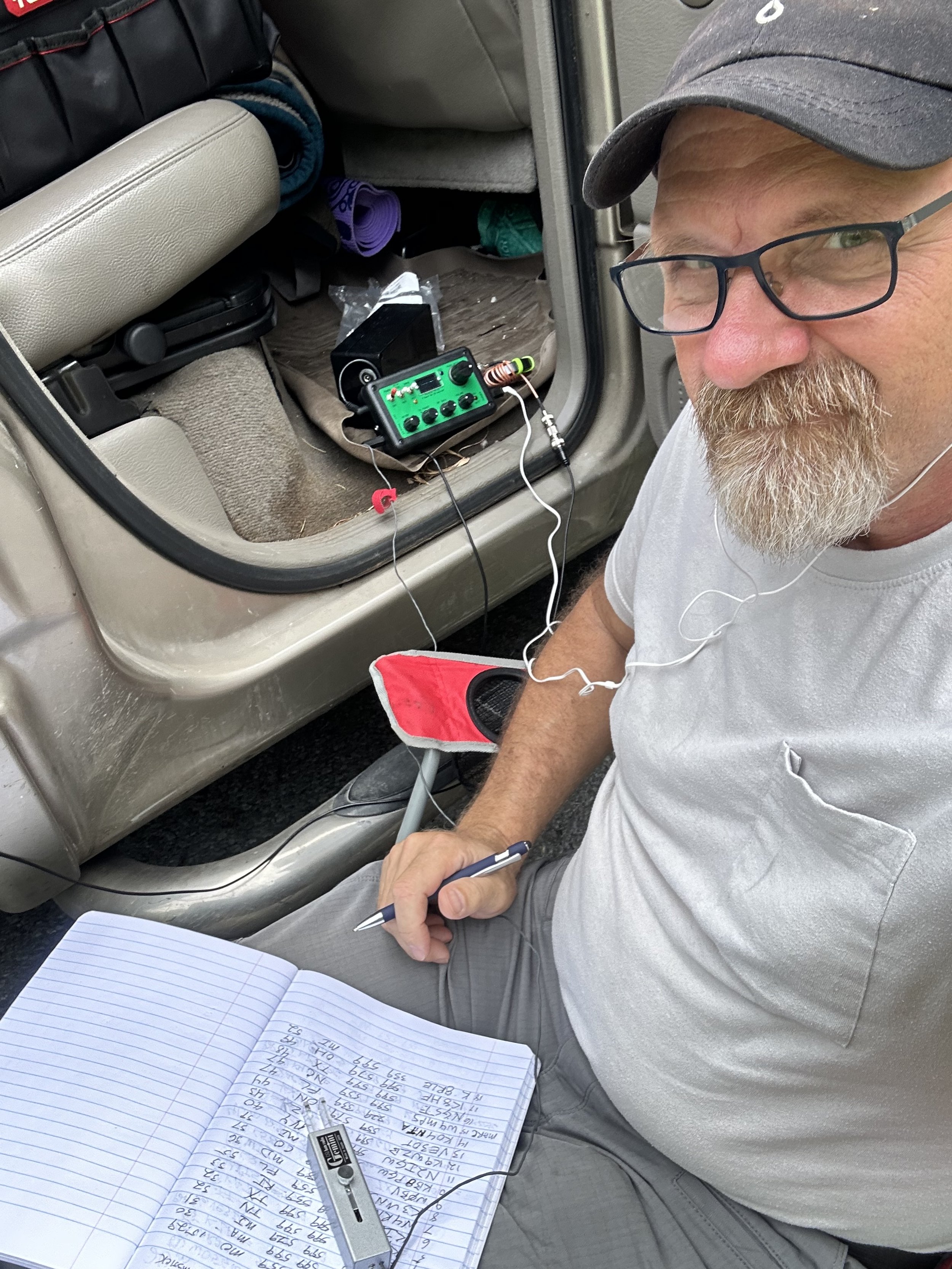
I took that as time to close up shop though and shut down the radio and packed it all up. It was a great little activation and I had a great time doing it even with the traffic on the other side of the truck. Good quality headphones saved the day here, so that is the lesson from this trip. Until next time. 72 de WK4DS
Activating a park in Louisiana was different…

I went to New Orleans for a conference and we stayed one extra day to do some sightseeing. We did a tour in the morning and ate lunch and figured I had time to ride over to a nearby state park and get an activation in before supper. I chose Bayou Segnette State Park (K-2356) as it was only about a 30 minute drive from the B&B we were staying at.

We get there to find a beautiful state park and almost every pavilion was occupied by these huge family reunions! That is fine though as the park is really roomy and there were plenty of picnic tables elsewhere. We looked for a picnic table in the shade of a tree that was keep kind of close to the parking lot so I didnt have to transport my gear very far.
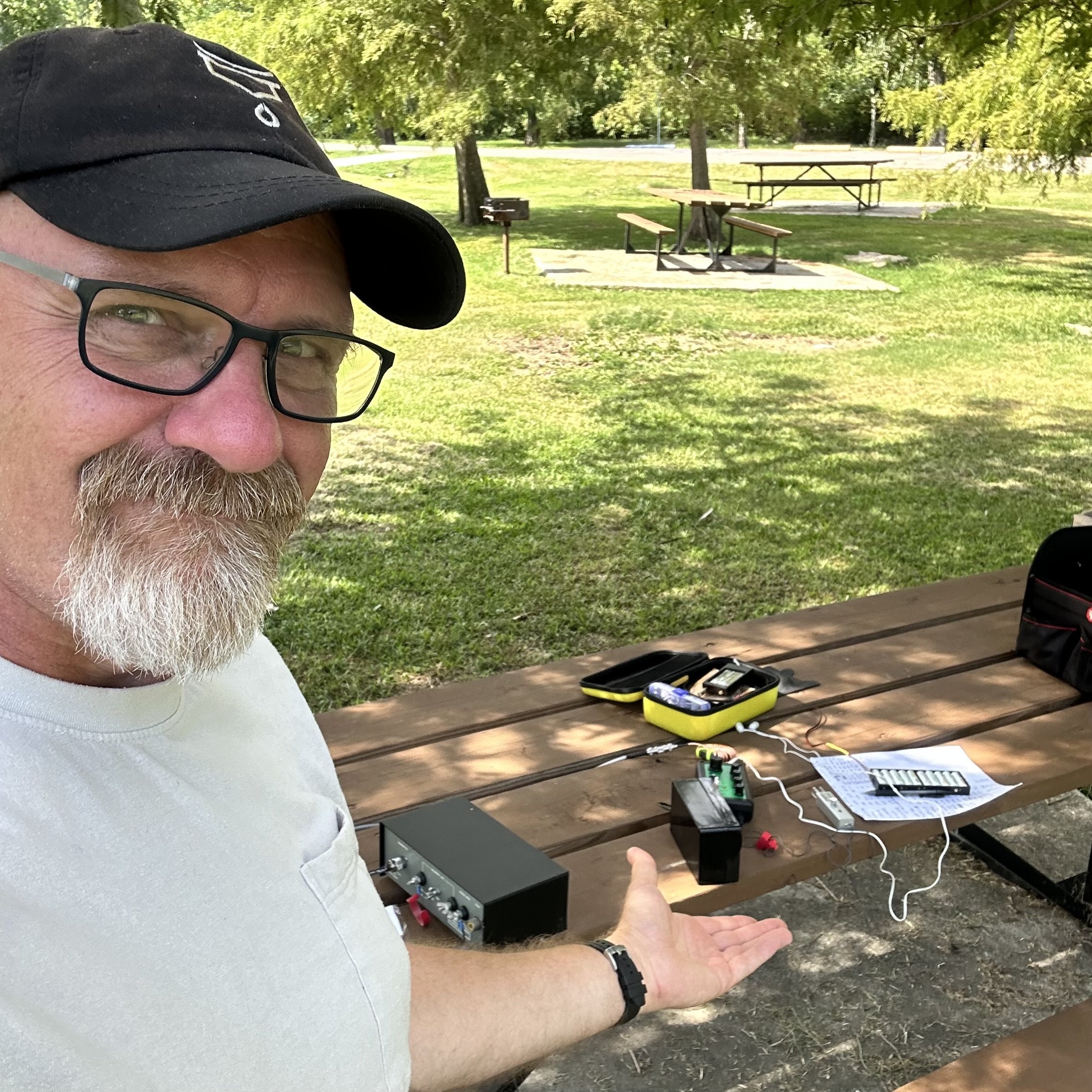
We also decided to come during an apparent heat wave too! The temps easily reaching 99 degrees (37.2C) every day so it was like standing in front of a blow dryer while outside. It was just plain hot… This was the reason I was looking for some shade to setup in, at least we didnt have the sun beating down on me while I worked some contacts.

So I found a table by this abandoned playground. Lol! It really wasn’t abandoned but no kid wanted to touch that stuff with the air temp that high!!! The shade made all the difference though as it was kinda pleasant once you sat there a minute, got a little sweaty and then a breeze would blow.

I had my TR-35 kit in the truck from an activation last week so I got out the throw line and threw it up into this cypress tree. In the photo below you can see the table and I am pointing to the spot where the throw line went over the tree. The antenna didn’t reach into the tree itself so it was a great placement in my book. The wire being fully exposed and not crossing tree branches makes a big difference to me if for no other reason.

This made my wire a sloper running uphill to the southeast. I ran the counterpoise out at about a 90 degree angle to the 41’ wire and connected them to the tuner.

I tuned it up on 17 meters and dial around the band for a minute to find HA3NU booming in and working a fairly deep pile up. I thought about trying to work him for a minute but finally decided to find an open frequency and call CQ instead as I wasn’t sure how much time I would have. Turns out I had about an hour… good call.

I called CQ for about 1 minute and was blown away when I worked SM2SUM in Sweden right out of the gate. Today is going to be a good day…I thought. The very next station was KP4M in Puerto Rico!!! It just keeps getting better!!! I worked a few more on 17 meters and then made the jump to 20 meters (where the scores can really change…)
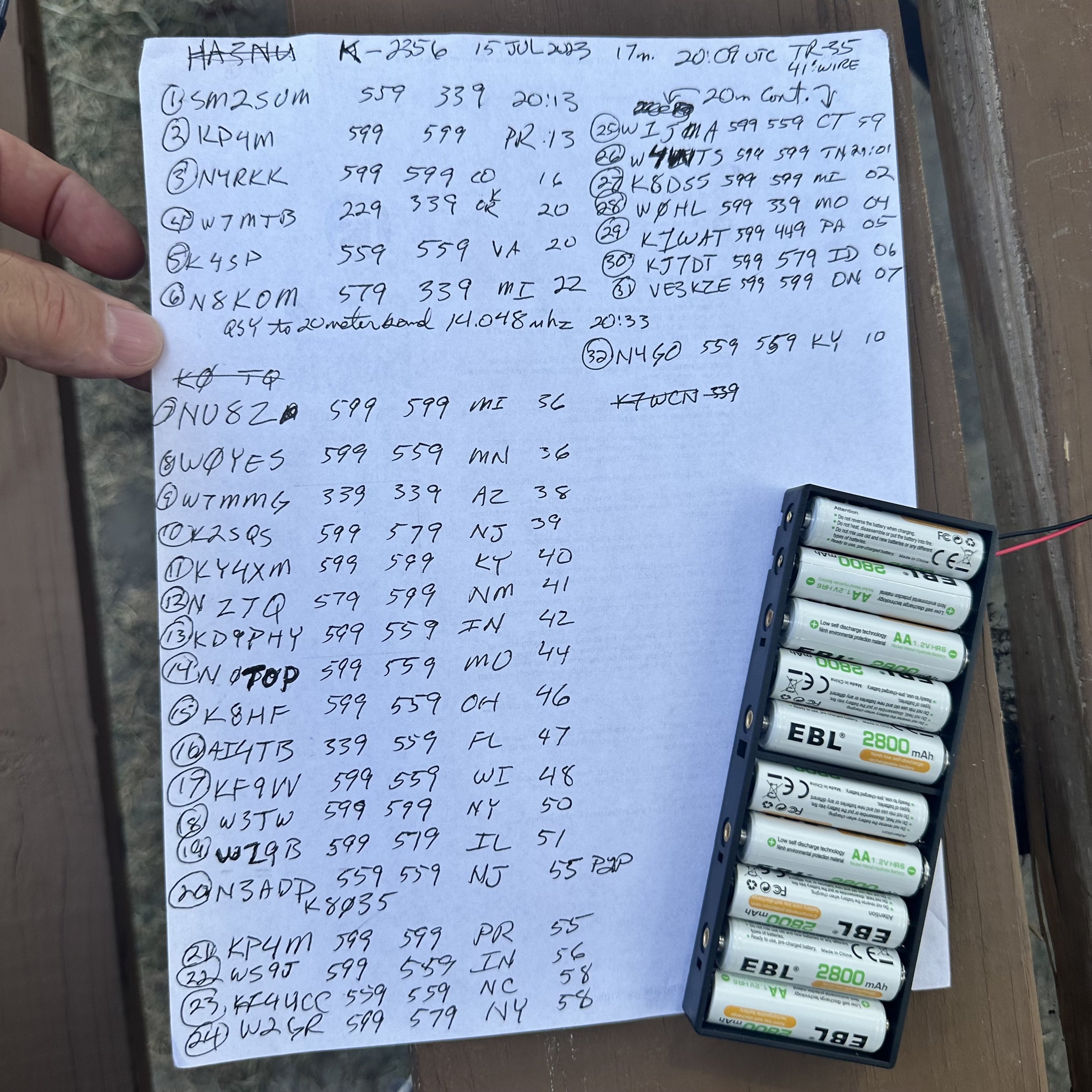
I worked another 26 people on 20 meters in about a half hour or so, bagging KP4M again on 20! Shoot, I even worked Paul KJ7DT today up in Idaho! The bands were pretty good if you ask me.
I wished I had time and a radio that would cover more bands to be able to get a few more out of it, TenTec Argonaut 5 I’m looking at you buddy... Maybe next time… It was a great day though and I added Louisiana to my states that I have activated!! I hope this motivates you to get out and do some POTA too. Thanks and 72!
Somedays you just make a mistake…

Today is Sunday, 6 AUG 2023 and I had a small window of time to get in an activation in the late afternoon. Teresa also decided to ride with me so she could get out of the house and planned on using her computer to do some projects she had been wanting to do. I forgot she mentioned that she would need AC power and this turned into a problem for me or so I thought. The inverter I have in my truck is apparently not very “clean” from what I saw today on my S meter…once again so I thought.
We get to the park (K-2169) and I grab the photo you see of the storm front coming into view. This is when I realized I would need to hurry if I was going to setup in time. I throw out a counterpoise and stuck the 20 meter hamstick on the back of the truck and ran the coax into the cab. I simply taped up the connector to keep the rain out and got back in the truck just in time before the deluge began.

So then once in the cab with it raining buckets outside, I do some yoga moves to get turned around and uncrate the Ten Tec Argonaut 5 transceiver. Since it is in that huge military case in the back seat, it was not easy to get it out from the front seat with the doors closed and Teresa in the seat beside me. I finally get the radio loosed from the surly bonds of the hard case and setup on the armrest of the truck seat.

I learned something at this point. I had blamed the inverter and Teresa’s computer for the rf hash I was hearing on the radio. Well, turns out when you are setting up in an active thunderstorm that the atmosphere is charging and discharging constantly. The static buildup is audible and visible on the radio as I watched the S meter climb to S9+10dB, hold there for several seconds then a flash of light would happen and the noise floor would drop to S2 and I could hear other stations again. Then the process would start over…

I listened to this a couple of times fascinated by the phenomenon I was witnessing in real time in front of me. Then it occurred to me that the static discharge that was resetting the S meter to normal was LIGHTENING!!! “Good grief, I’m such an idiot” I thought… I hurriedly shut off the radio and disconnected the coax as fast as possible. I threw the cable into the back seat and waited on the rain to let up. I figured since it wasn’t grounded that it wouldn’t attract a lightning strike and I was right as it didn’t hit the antenna. That is my theory at least… Once the rain subsided to just a drizzle, I pulled the truck forward to get the counterpoise out of the grass, got out and quickly broke down the antenna and stowed it in the truck bed. Once back in the truck the rain picked back up and I threw in the towel at this point and just headed home.

Mother Nature has a cruel sense of humor at times though so just as soon as we cleared the park and was on HWY 136 headed back home, the rain literally stops and the clouds start to break up. I was too frustrated at this point so I just went on home instead. I don’t count this as a failed activation officially as I never sent a CQ, but in reality, I should as I had the entire station online and never made a single contact. That would make this the second failed activation in my entire POTA “career” you might say. I should have believed the weather man…errrr… app when it said a front was inbound. Next time I will pay attention.

I never even opened the logbook today…sad. I should have stuck it out 15 more minutes, I could have gotten an activation in by the end of the UTC day at least…
Thanks for following along, but the point of this article is to pay attention to the signs your radio gives you about thunderstorms. If you see the S meter climb and it has a ton of static on the band with a constant signal and then it just drops back to normal all at once and you either see a bright flash or hear thunder a few seconds later, this is probably the clouds and you might want to turn your radio off and disconnect the antenna…just as a precaution.
73
WK4DS - David
How about this new tiny CW keyer I bought?

I have been on the hunt for a quality keyer for my Ten Tec Argonaut 5 radio for a long time now. You see, this radio is a bucket list item for me and I finally found one. Well, just like all Ten Tec radios, this one only has a simple keyer, with no memories to record messages like most modern radios today. I really enjoy having message memories to send CQ and even sometimes to send the closing statement at the end for a number of reasons. So enter the external keyer…

So to spoil the outcome right at the start. This keyer is just what the doctor ordered. It worked just exactly like I wanted it to. I love the form factor, the size and especially the functionality. It has so much going on that I had no idea was there, like it has macros… kinda. It has these short hand codes that will call up other memories or repeat information or trigger other functions. One that is really neat is that you can change the keying speed with a command embedded in the memory message, so say your in a contest and you want to send the 599 BK really faster as literally everyone is using this exchange. Then you can add a small command at the beginning to change the speed of the message to say, something like 35WPM, then send the exchange and at the end execute another command to change the speed back to what the knob on the front is set for. This works, I tried it. On top of that, it will do serialized messages too! This little keyer is loaded!


Below is what you get when you buy it. The widget and a slip of paper with the info on where the manual is online. I downloaded the manual and promptly printed it out. The manual is well done, easy to understand and also has the assembly instruction as apparently this can be had in kit form too.


The front of the keyer has 4 buttons and the speed control knob, that’s it. It has everything you need and nothing you dont. Plain as that.
Another thing that I kept going back to was just how small and light it is. It weighs practically nothing and is about the size of a pack of playing cards cut in half… As for the buttons, there are things these do other than record and playback memories. By pressing multiple keys together, you can do all sorts of other things, like go into the menu, or set it for tune up mode where it will send a constant carrier so you can set the tuner for the antenna and so fourth.

The back is even simpler. The sockets are as follows: left to right, The headphone Jack for use as a practice oscillator, the paddle / straight key input, and then the output used for keying the radio. By the way, this thing even auto detects the keying device and sets itself to the right mode for you somehow. That is some serious dark magic right there.

These are the screws you will remove to replace the battery…next year. It is supposed to last that long, we shall see as I plan to use this radio a lot more now that I have a memory keyer for it.

You will see below that I had to adapt the cable going to the Argonaut 5. This is because the output is setup to send to the radio as a straight key. (I am pretty sure my other keyers were the same way and I simply forgot this little fact.) So you have to set your radio to straight key mode and then come up with a 3.5mm mono to 3.5mm mono cable. Well I didn’t have a cable so I used one of my headphone adapters that turns stereo headphones to mono headphones and it went right to work. I will most likely get the right cable pretty soon, but for now this will get me by just fine.
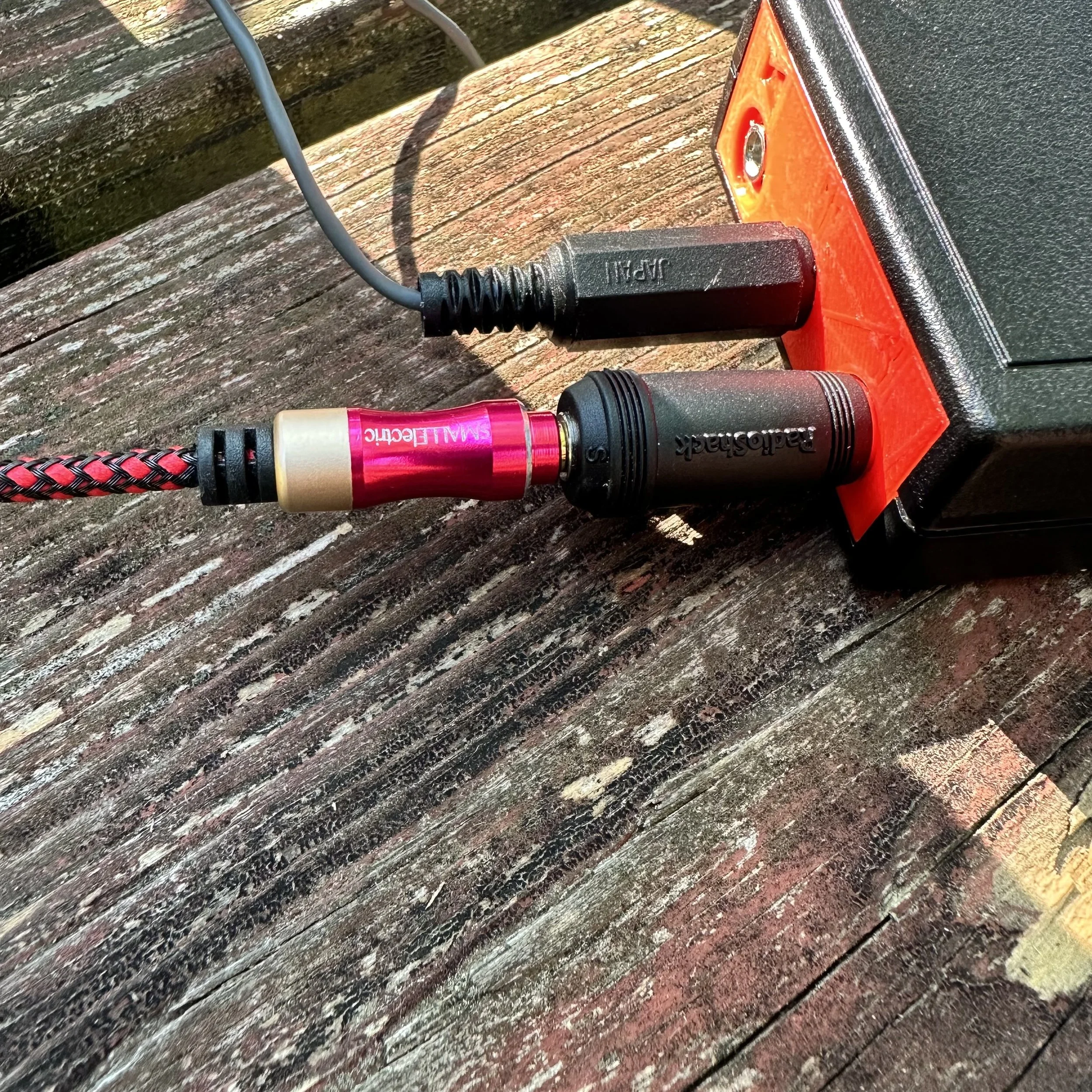
When I had the keyer setup in the shack at home, it performed flawlessly and I was able to get it programmed and used it to chase some DX as well as hunt a bunch of POTA activators before deploying it.
As soon as I got to the park and setup, it went nuts on me. The code had this odd “modulated” kind of thing going on and was unusable. So now what???

Turns out this coax was my problem…well not this coax in particular but the fact that it was so short. You see, the antenna was connected directly to the back of the tuner so the RF was in close proximity to the radio. I speculated that this might be the problem so I got in the support box and found another cable that was longer and spread the radio set out as far as possible. This solved the problem for the most part. I think that some RF choking on the cable going to the radio will help more too.


I also included my common mode choke since this cable is BNC on one end to get rid of that possible problem. This also required me to convert the connector on the radio from SO-239 to BNC.
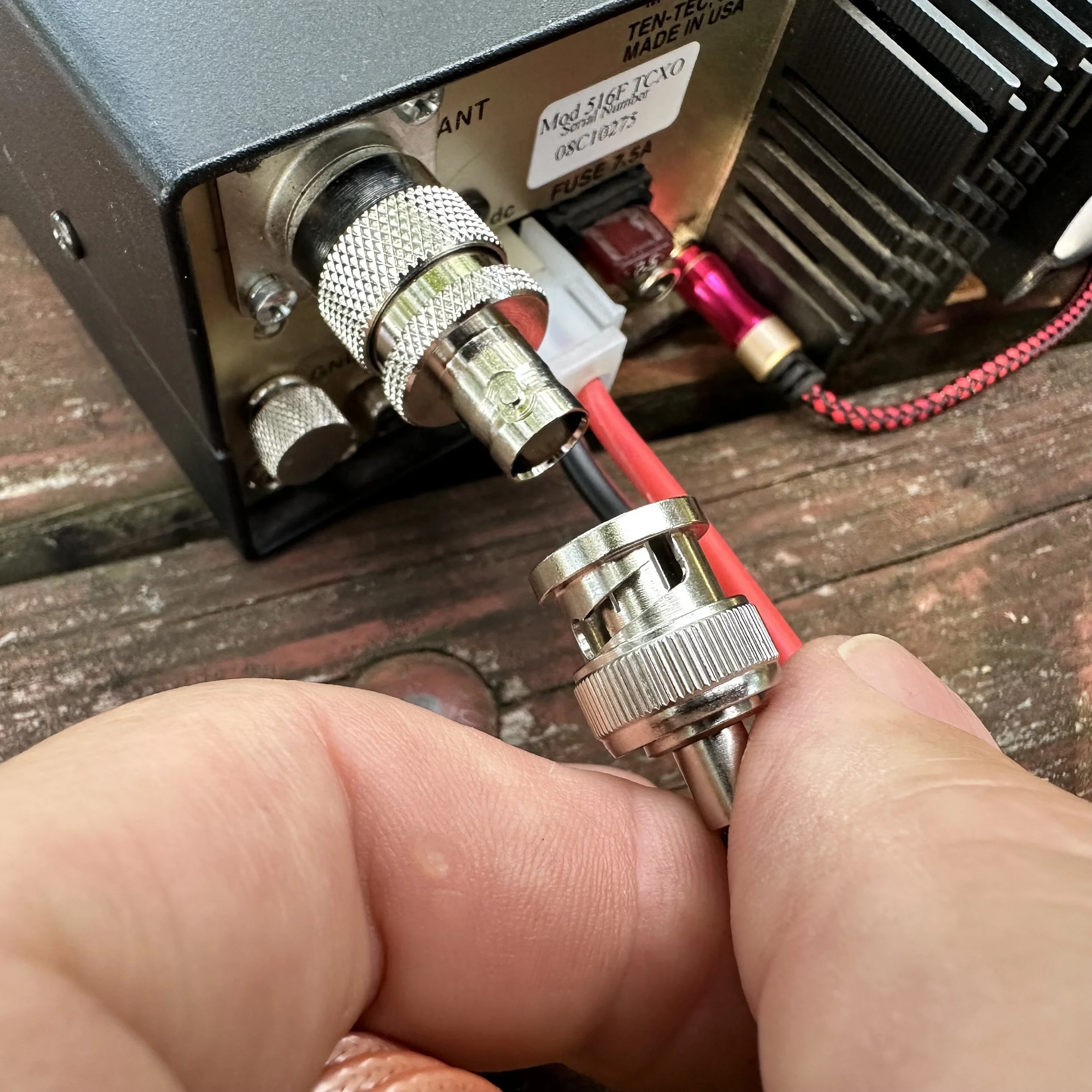
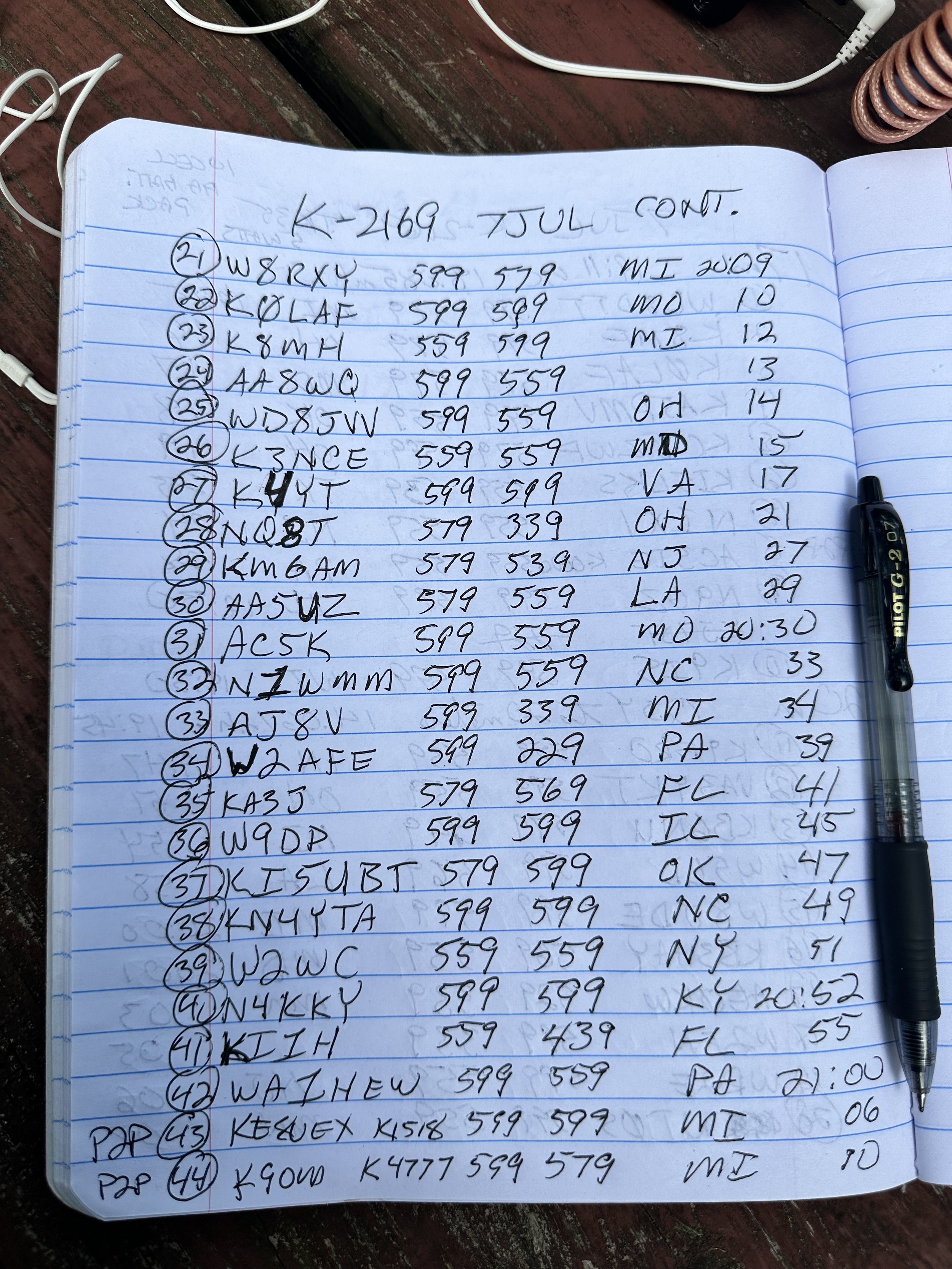
The radio performed very well at this point and I was able to secure an activation pretty easily even though there was heavy fading with the bands on this day. I could literally hear a 599+20dB station fade to almost nothing while copying the simple POTA exchange. It was really bad at times. If you will notice W8LEO is struck through with a 599 signal report, he called me and I never heard him again, he just vanished.


All in all, I am almost done sorting this little machine out and I am confident it will perform wonderfully on the air for many upcoming activations in the future. It is always nice to take a chance on something like this and find out it is much more than you bargained for. If you want one for yourself here is a link to the website and a screenshot of the eBay listing for reference. Hamgadgets.com Thanks and I hope to see you soon.

Band conditions can be evaluated quickly.
When I figured this out I was doing an activation and decided to take a bunch of screen shots to show what I am talking about.
The other day I was activating K-2169 and kept getting signal reports with people telling me there was QSB (that is band fading for those that are not familiar with CW shorthand terminology). A little later into the activation I went to the POTA spot page to check to see what my most recent signal strength report was and thought…self, what does the history look like for this activation?


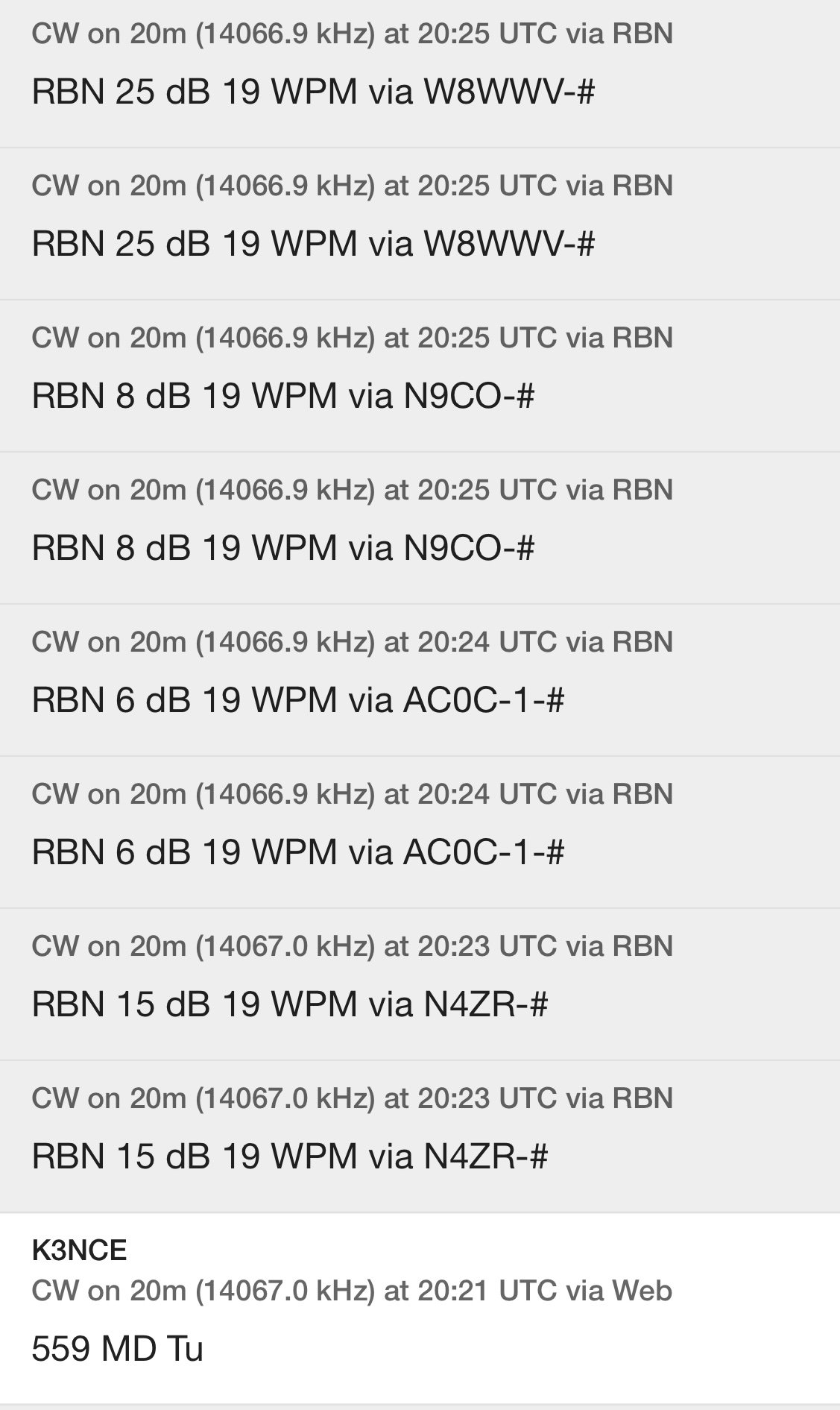

Now you have to take these reports with a grain of salt as the reporting stations are all over the place, but the signal reports as still indicative of what is going on with the band from where I am to the areas these listening stations are in. It also shows that the signal was fading in and out pretty hard every few minutes which is why I would go for five minutes at times with no one calling me back. then I would work for or five in as many minutes. These little short band openings are all I got when running QRP… So to get these reports you will log into the POTA spots page and pick a station that is active and click the little symbol next to the re-spot button and it will pop up on the screen. Looking at the history a little will show if the band is strong or weak or that it is fading in and out and even what the interval of the fading is so you can kind of tell what will probably happen in the next few minutes. I think this is a valuable resource that a lot of people don’t even know is there.
I hope this helps someone on their ham radio journey. 72
Testing a new power pack for backpacking…
This is the idea… I think I want to do some SOTA activations after listening to K4SWL talk about them on his YouTube channel. So this means that I need a smallish radio setup to be able to do these kinds of activations. I have to be able to pack them in and out from the SUMMIT, yeah, the very tip top of a mountain…

Today’s blog post covers the idea I have for a power source. I am going to use AA batteries. I know I can buy a Bioenno battery, but this gives me the options of picking up regular alkaline batteries if need be (I plan to make a couple of aluminum dummy cells for this option so the voltage wont be too high). It also allows me to repurpose the cells for my HT radios too as I have them configured to used these batteries as well. I found these 10 cell battery holders on Amazon and ordered one to try it out. Since it hold 10 cells, the voltage is higher and gets closer to the regular battery voltage everyone uses. The cells are 1.3 VDC when charged so this adds up to just over 13 volts in this kit. I measured the pack today before the activation at 13.2VDC…Perfect for what I wanted. So I load up the new battery pack and head over to K-2169 to test out the power pack life with a POTA activation.

The above photo is an optical illusion that has to do with the shutter speed of me camera and the refresh rate of the display on the radio, to the naked eye it was not gapped like this but looked fine. This little radio is a perfect little radio for SOTA so I am going to use it for that purpose.

Here is the basic radio kit as I plan to deploy it. The headphones are smaller and lighter than my box speaker/battery pack I made. I can also hear better on headphones too so it just made sense to use these instead. These are Sony headphones if I remember right, but I could be wrong. I will also be using my little travel key I bought as it is perfect for this project…till I get the new one that I plan on in the not-to-distant future.

I also plan to use a 40m EFHW antenna for my activations and just work 40m and 20m bands with it. This is the simplest antenna setup I can come up with as it doesn’t require a tuner and is pretty small for what it can do. I might get one of the compact verticals at some point, but for now that will have to do. I will also take a piece of throw line and a throw weight as well to get the antenna into the air. I will also add a piece of coax as this is the counterpoise in most cases. Otherwise I will need a coax AND a counterpoise… so I will eliminate the counterpoise and just work off the coax shield instead. Above is the tuner I used today as it was still in the truck from the last activation and I know how good it works.

This is the beauty of using campgrounds to activate, there are plenty of tie off points for your antenna system. LOL

After working almost 50 contacts over about 2 hours with almost all of it either making a contact or sending CQs meaning there was significant battery draw over these two hours, the battery voltage had only dropped from 13.2 to 12.82VDC. A little less than .4VDC or about 3% of the pack voltage overall. That is great as this tells me that almost any hike-to activation will have plenty of power to make contacts. I dont think I will be doing SOTA where I will have more than two or three hours on the summit for radio as there is the hike to and fro that has to be factored in as well. I call this part a success.

Pro-tip to the new hams just getting going. Grab a cheapo little volt meter for a field meter. This one was only a few dollars and worked perfectly. This technology has gotten very affordable and can be a priceless tool when you need to check the continuity of a piece of coax or to see if the battery pack has voltage on it like here. It has come in handy quite a few times now and stays in my POTA kit all the time. Until next time…72
July 1 2023 Morning Activation AAR
It was perfect weather and my operating position could not have been better today…

Today started out like any other day… (I have always wanted to start a story like that…lol) I loaded up the radio gear for the day, the Penntek TR-35, a TenTec 277 antenna tuner and a 41’ random wire antenna that I built for my trip to Hawaii last Febuary. (There is a write up about that from back in March if I am right)

I set up the radio today at the canyon rim since I wanted to use a wire antenna and this requires throwing a line up in the trees. I have my favorite picnic table that is right in the middle of the trees and is kinda out of the way of the hikers in the area as well. I throw the line up into the tree and it didnt get very high…uggg… Pull it out and rethrow it, again, and again… FINALLY get it about where I wanted it and ran with it. Not optimal as the antenna was running over some branches at the top but it was arial so I let it ride. I also just tied the throw weight to the line and left it suspended to maintain the tension on the antenna and not have to tie it off. I set the box that I carried my extra widgets in, under the throw line and weight to keep people from accidentally walking into it as it was hard to see and people did occasionally come by. I am pointing to the weight in the photo below…see what I mean?

I bought this Ten Tec Model 277 tuner on Flea-bay for really reasonable money and it is in excellent condition too. I like it as it is made by Ten Tec and it has connections for a coax, balanced line and a random wire antenna on it, this versatility is not on all tuners out there and makes this one really desirable for me. It is a simple design with a tapped coil inductor and two air variable capacitors. The SWR meter was just icing on the cake, I dont use it to tune most of the time, but rather the nanoVNA as it shows the “tune” of the system graphically and makes it easier for me to get done much faster. But what is good about the swr meter is that is the antenna changes or I bump a knob on the tuner or anything like that, it will show me instantly that the system is compromised and needs attention. That is a nice perk to be honest.


I also built out this simple kit for my nanoVNA to keep all the widgets I have accumulated for it, all in one place so I have what ever I need when I use it. This makes operating with the VNA a breeze. The yellow case was something I picked up at a hamfest from Gigaparts for cheap and it works perfectly for this job.

Here is a look at the antenna “kit” that I have put together. i learned a while back that it is simpler to find the things you want if you label them clearly. Hence the flagged counter poise and radiator. Also shown are the throw weight I made in the machine shop and the arborist 2mm throw line I also picked up at Gigaparts in Huntsville AL.

Here is the star of the show for the day, the Penntek TR-35 amateur radio. This radio is CW only and has a strong output setup that is pretty much impossible to damage with several temperature and current over protection circuits built into it. I have made a metric ton of contacts on this radio and today was no exception. Although the log sheet is light on quantity, the ones I did get are awesome! I even got an email from WA6YPE showing me his QRP rig that he called me with using a mag loop antenna in UTAH!!! I was also QRP at 5 watts going to him too. When the bands are “on” it doesnt take a lot of transmitter power to go a long way.

I also made another small goal for this day, I was able to make at least one contact on each band the radio is built to use. It is a personal little goal when I have a tunable antenna like this wire with me. If I am using the hamsticks, I can also do it then but it is more work on my part and a lot of the time I dont want to put out the radials for the other bands and will just use 20 and 40 only since they share radials… lol.
Also of note is that I worked DX for the 2nd day in a row that was not Canada (which I still consider DX for me). Today I was dialing aroudn on 17 meters and found XE1CT calling CQ and he was booming into my radio, so I thought he might just be able to hear me too. I threw my call sign to him and he came right back! Even though it is just Mexico which is actually no further than states like Arizona or Idaho, it still makes me happy to work them. There is just something about making contact with a foreign country that is special for me since I normally only activate with QRP power only.
If you think activating a park is hard, dont let it stop you, it is really fun. I have literally only had one outing where I didnt get the activation and that was my fault since I setup on a little used band, with a QRP radio, on a day when the bands were terrible and did so 45 minutes before the end of the UTC day too. Chalk it up to “giving it a shot” and it was still fun. Most of the time if you will just hop on 20 meters right quick, you can get the activation required 10 QSOs out of the way and then if you want to try to get contacts on other bands or modes or what have you, then at least you know you have the activation in the bag first. Simple tactic but it works perfectly for me.
Some days I am bolder and will set up shop on 17 meters and dig out the activation there before.I go elsewhere, but if I am pushed for time or something like bad band conditions, 20 meters is my goto solution. It pretty much always gets my activation. Just a tidbit if your thinking about activating a park sometime and have not done it yet…
Quickie Activation with some cool DX!

When I started this activation, I had no idea how the bands would act, there has been a lot of QSB lately so it is kinda a crap shoot. I only had about an hour so I figured I would try to get a few contacts… little did I know I was about to have a lot of fun!

God showed his power to me today when I got on 17 meters and started calling CQ. I had gotten my first contact pretty fast and it was another activator, so I got a Park to Park right out of the chute. Then I started hearing this station just up the band from me… I dialed up and found it was a fellow down in Turks and Caicos! I waited till he called CQ and threw my call back to him…and he HEARD IT!!! DX in the log and I am just getting started!!! Woohoo! Then the VERY NEXT QSO was Sweden calling me!!! For me, this is cool dx, as I dont get to work other countries very often, especially with a QRP radio…

If you look close (right beside the key), you can see where I pieced together the call sign for the VP5 call sign. He was going faster than I normally can copy so I grab letters one or two at a time till I build the whole call. Then I listen for the exchange and at that point I am ready to try to call them. I think they were probably running about 25 WPM of maybe just a little faster, and I normally operate at around 18 to 20 WPM…

On this day I used my Penntek TR-35 radio on the bed cover of the truck. This is a fun operating position as I get to interact with other people in the park some as well. On this day, there was a family that wanted to know what all the wires were about so I took a short break and explained what I was doing to them. This is why there is a 10 minute period between contacts 3&4 in the logbook.

Another point about this common mode choke on the TR-35, it is the perfect size to hold up the radio when operating like this… lol. It does look “techie” too so it makes the little station look cool in my opinion. Lol.


The radial connection works really well for the multiple setup like I am using here. This is all the radials to cover all four bands the TR-35 has access to, 40, 30, 20 & 17 meters. This way I only need to switch the verticals to change bands. It is actually really fast like this and I am debating whether or not to make the multiple antenna mount now…

As noted in a previous blog post, I added an Anderson Powerpole socket to the little module for other things to be able to share the power as well. I don’t need it with this radio but it is nice to have when I run my IC-705 as the antenna tuner has it’s own power cable.
So to wrap things up, you never know when the band will open and you can make a 4500 mile contact with your QRP rig on a hamstick till you hook it up and try. So get your radio out and go play with it somewhere. Until next time…
72
WK4DS
There is something therapeutic about CW and QRP for me.
I really enjoy activating parks when I need some time to myself. I tend to not ask people to go with me but instead just go alone and I think I know why now.


Today was a perfect example is why I figured I would write about it. Today wasn’t particularly stressful but rather just really busy with lots of little tasks needing to be completed all day long. This slowly took its toll on me and I really needed some down time to get myself back in alignment.
A park activation was just the ticket. I find activating a park to be very soothing whether I have a huge pileup or no one answers me for minutes at a time. I also like to go by myself as well as I have concluded that direct human interaction is stressful for me and I don’t want that when activating a park. The radio contacts for POTA are rhythmic in nature and give me something to focus on that is low stress. Especially with CW since using CW for me still requires me to think about what I am hearing for now.

Take this operating position above for instance, it is simple yet functional and it is fully immersed in nature. I think this is another reason I like activating parks, it gets to a quiet place away from the busy world around us.

Another thing that is magical about it for me is how I can transmit a simple signal with just a few watts of energy and someone listening on the other side of the continent (and sometimes even other continents) can hear that signal and reply to it. Today was a hamstick kind of day as it is quick to deploy as I only had 45 minutes before the UTC day ended and I needed my “ten QSOs” before that happened.


This 2” pvc pipe makes the perfect hamstick storage tube and holds 5 hamsticks with qd mounts installed just fine. It is actually too long but not by much. It fits in my truck bed…exactly… with no wiggle room so I just use it. Today I simply strung the counterpoise for 20&40 meters and just used those bands since I can usually get an activation pretty quickly with those two bands. So to change from 20 meters to 40 meters I simply unplug one antenna and snap on the other. No tuners needed or anything, just a band change and we are off to the races.

Another thing I like here is the simplicity of the TR-35 radio and how it literally has zero menus. It has everything I need and nothing I don’t. Pure CW goodness at it’s finest… well, it could use 15 meters. Lol.

As can be seen above, the bands were fairly alive today and I was easily able to seal the activation before the UTC day flipped over. Signal reports varied as the bands would fade in and out but were favorable for the most part. It was nice to work so many familiar call signs such as KN1R and WD4DAN and even a few Canadians to boot!
Thanks for following along today and I hope to work you on the air soon. Until then 72
WK4DS
I finally went to a different park!!!
This activation is from not only a different park BUT A DIFFERENT STATE!!! Today I activated K-1039 Desoto State Park and it was a lot of fun even though the QSO count is pretty low.

So let’s set the stage here. I had some business to take care of in Ft Payne AL pretty early so I figured I would find a park close by to activate if I had time. Well, Desoto State Park is only a fifteen minute drive from there, so here we go!

Now to be fair, I know this park well as we have spent a considerable amount of time at this park over the years. Backed with this knowledge, I had a pretty good idea of where I would setup for the activation.

The “weapon” of choice today? The Penntek TR-35 QRP transceiver. I have grown to love this little radio over the past year and it is now one of my primary radios I take to the field when activating parks. Here it is with the supporting kit to get it on the air today.
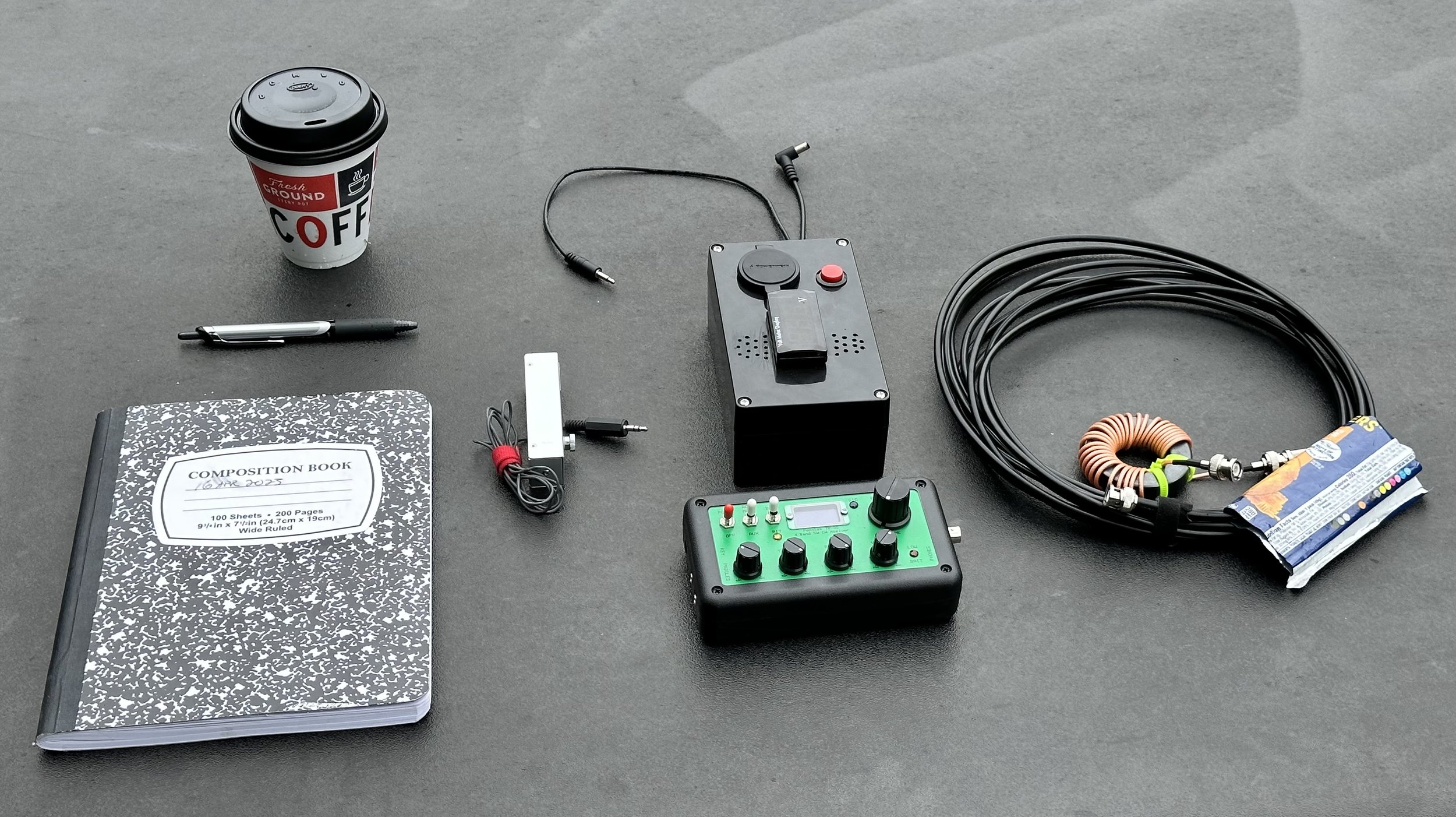
Yes, the cup of coffee is part of the kit. LOL. Of course the antenna is not shown, but I do have the coax and the RF choke pictured. The RF choke is sort of optional as the radio will work without it but I like having it installed. The black box is the power pack/speaker unit I built for this radio, then there is the travel key and a pen and notebook. Done. Simple. I love it.

Below is what the assembled station looked like for me today. I really like to do my activations from the bed cover of the truck if possible as it is more inviting to passerby people and gets me out of the truck. Once I found a clear frequency I dont really need to be right on the radio so I can set it a little out of the way like it is here and just have the key and notebook at hand for logging.

The location I chose wasnt really the best for someone not wearing headphones to be honest. I was right by the road (as you can see below) and didnt take that into consideration when setting up the station. If I had thought about it, I would have worn headphones to be able to hear as cars would pass by. Cars are a lot louder than I realized for some reason. Lol. Lesson learned, I wont make that mistake twice.

This little parking lot is about half way to the old entrance to the park (it is the first photo above) Sadly, most people never see this beautiful stone work done by the CCC back in the 30’s as the main road into the park now goes a different way.

I always try to back my truck into the parking space so the antenna is out of the way. This keeps little adventurers out of my radials and such. But it also lets me setup like you see here which is over to the side and out in the open. Below shows the logbook and the signal reports are kinda telling. Don’t reference mine, the first column, because I don’t have an S meter on this radio so I am just guesswork. The second column are my received reports and they show the bands were terrible.
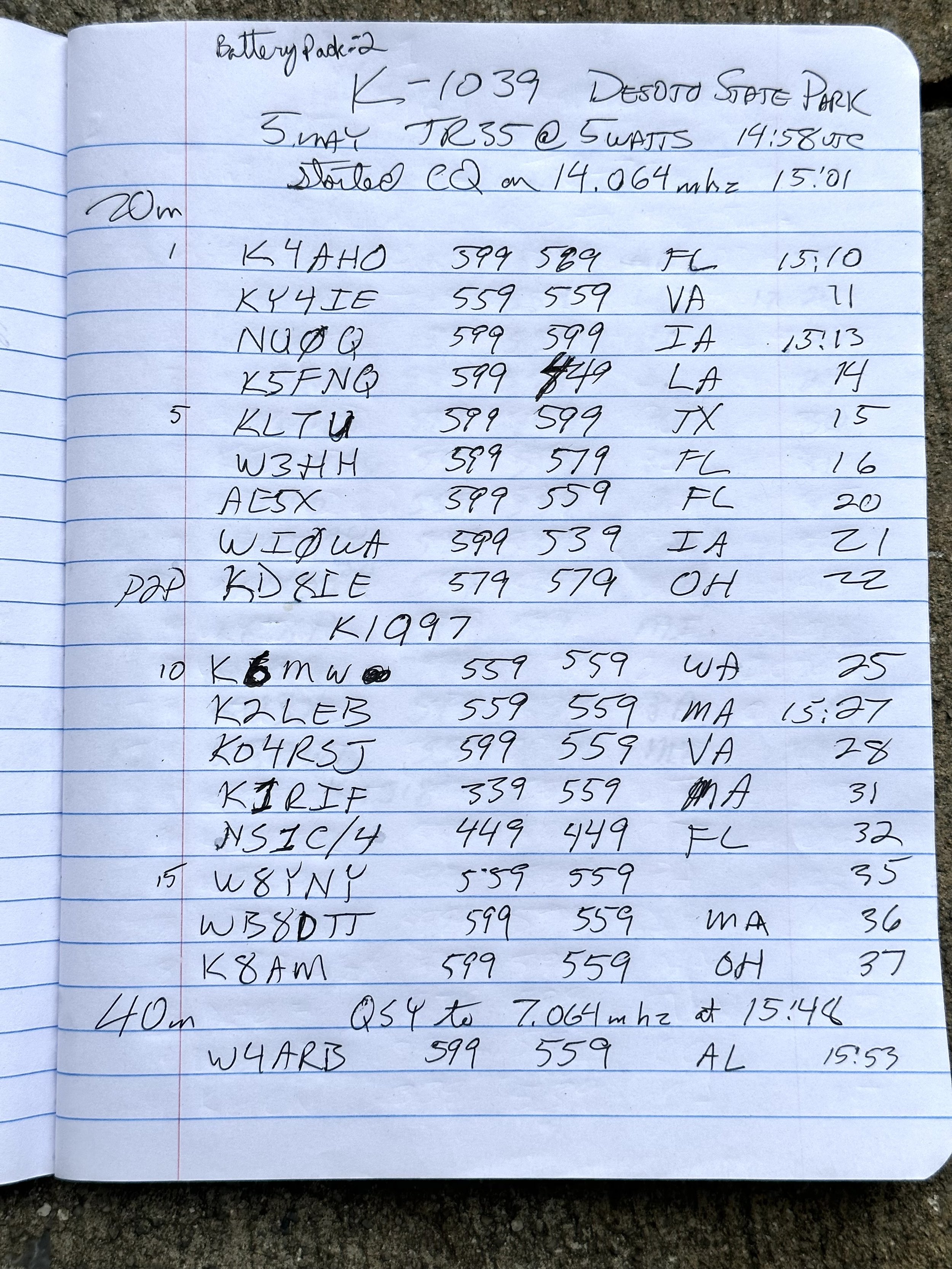
Locations that are normally 599 both ways are barely getting in the log today. Still got it done though. Thanks for following along with my journey. Until next time…
72
WK4DS
A picnic table activation for a change!
Well, I was beginning to wonder when I could do this again…comfortably. 😂 I have been operating from the truck for so long now, that I felt like I was at a new park when I went to my old favorite picnic table.

So for this “special” event, I wanted to take something out of the ordinary for me. So I used the Penntek TR-35 radio (this doesn’t fit that description but the rest does) and fed it through my vintage Ten Tec antenna tuner to a 65’ random wire with a couple of 10’ counterpoise wires.

To make tuning simple and fast, I use my nanoVNA and simply unplug the BNC from the radio and plug it into the VNA, adjust the tuner for a nice reading on the VNA for the band I want to use and then transfer the coax back to the radio. This way I am not transmitting carriers over the air while I tune and I can visually see what is happening while I tune. It just makes it so easy for me.

Something that I also built for this is the powerpack/speaker unit. This device houses a Bioenno 3aH battery and I installed a couple of speakers as well as a volt meter (that is activated via a push button to prevent battery drain by the meter) and a Anderson powerpole port (added after this activation). I wanted a device that could essentially “complete” the TR-35 sans antenna… It is missing a key of some sort that might just get added a little later. A simple straight key built into it somewhere would be pretty sweet to be honest.


The next thing is how I put up my wire antenna. I first threw a line over this huge tree limb and pulled the wire over it.

Then I threw the line as high into this tree way back here as possible and hauled the wire up about 30’ or so into that tree. It is making a horizontally run wire of sorts and work’s shockingly well. It also keeps the wire out of the way of park goers as well.

All in all, this map shows how well the little TR-35 with a 65’ wire up in the trees worked. I even dialed up some DX on 17m before finishing and worked FY5KE in south America before going QRT and breaking it all back down.


So I look forward to working many more ops at my local park with my little QRP radios in the coming weeks and not being bound to my truck so I dont freeze to death in the process like back in the winter.
72
WK4DS
AAR from a couple of short activations
The last couple of days has actually been good for my radio habit…errrrr…hobby. Yeah, hobby… lol.

Both were at K-2169 as I am working towards getting 100 activations at this park and it is close to home as well, so I can go play with my radios fairly easily here too. The new part about this trip is that I went to a different part of the park, this section is on the east side of the park and is a trail head for mountain bikers and hikers mostly. I knew I was fully in the park when I saw the boundary sign at the entrance to the parking lot.

These two photos show how convenient it was to setup here. The first photo shows the view from the road in front of the park with the boundary sign out front. It also shows the yellow electric gate behind it as well. The next photo shows my truck parked in the corner of the lot with the yellow gate in the foreground. It was pretty busy here too, there was a lot of people out riding as it was a Sunday and the weather was perfect.

Here lately I have been using the Icom IC-705 QRP radio as it is easy to use, has memory keying and METERS! I can actually confirm the SWR is good before just trying to load it and hoping for the best. Also note the common mode choke too as well as the 8aH battery behind it, I have been using this battery since last summer and it works wonderfully. I can activate at least 3 times with it before even needing to be charged. That is incredible! One other thing about the IC-705 that I like is that it has an external speaker. That is nice if I can setup on the truck bed cover like I did here so I don’t have to mess with my headphones.
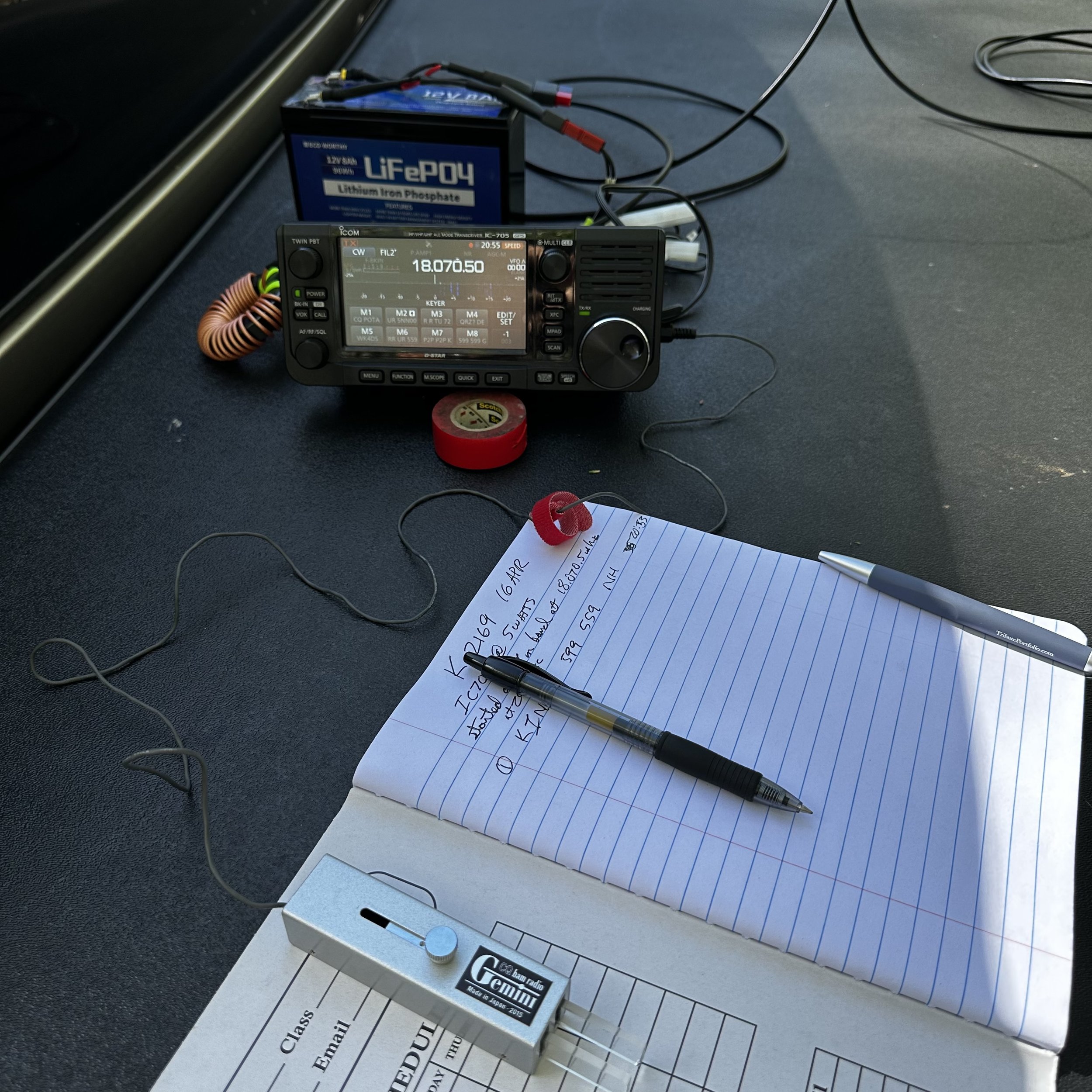
Below is a problem I have not had before. The antenna was in the tree branches and I am certain that it was killing my signals. I moved the whole truck forward 2 feet and got out of the branches and immediately started making contacts. So a note to myself is that I don’t need to let my hamsticks touch the tree limbs when I setup in a park…

17 meters has been crazy lately, as in this contact to Italy with 5 watts. I was weak to him, but he heard me! He probably had a tri-bander or a dedicated 17 meter Yagi pointed my way, but I don’t know…


Once I switched to 20 meters the signals were much stronger and I quickly secured the activation and was able to wrap it all up and be back on the road in just under an hour. Not bad for a guy with a few hamsticks and 5 watts of power…

The next activation happened 2 days later and this time I was also only able to stay for about an hour. So this time I wanted to see just how much I could trim off the setup and go full on minimalist with the activation this time. The weather was nice so I didn’t even have to run the coax into the cab of the truck. As you can see, this time I used the internal battery on the IC-705 as the radio will run 5 watts when using this battery anyway and it was super fast this way! I could have probably left the common mode choke off as well but I liked knowing it was there protecting the radio…

I bought a pack of various BNC adapters off of Amazon and here is the male to male coupler connecting the coax to the choke. This makes setup of the cable to the antenna a breeze.

Here is another time saving item I used today, instead of both radials, I used just one of them and stayed on 20 meters the whole time to eliminate the time needed for band changes. It seems to work at about 85% as good as both radials so it gets the job done but if I am not in a hurry I will deploy both radials as it just seems to work better.


All of the strike thru partial QSOs are from what I can only explain as strange band conditions. It was like the band would be fully turned on one minute then like a switch it was gone the next. I would try a bunch of times to get them back but finally figured out the band was dead to that area and had to move on. It was really strange how it kept happening too. I mean they would be LOUD and then gone… Most likely it was them listening for me as I was QRP and the reports are showing not so great reports when I did get contact. So I am guessing I just faded into the noise floor on their end to be perfectly honest about it.

All in all, it was still great to get a coup[le of activations in and have some fun on the air at the same time. Thanks for reading along about my exploits.
My 80th Activation of K-2169
This AAR is brought to you by… wait for it… me! Lol. But seriously, today is special for another reason or two, on this day I activated Cloudland Canyon State Park for the 80th time and I met another ham at my home park!


Today, once again I setup the truck in the lower lot like I did a while back as it is faster somewhat but also it has a different view as well. I normally don’t setup down here as I have had issues with electronic hash noise in this area (I am guessing it is coming from inverters in the campground just over the hill) so that is why I goto the top of the hill where the disc golfers are most of the time. The antenna situation today is as follows, I went ahead and installed all the radials at once as it was threatening to rain the whole time and would sprinkle on occasion during the activation regularly.
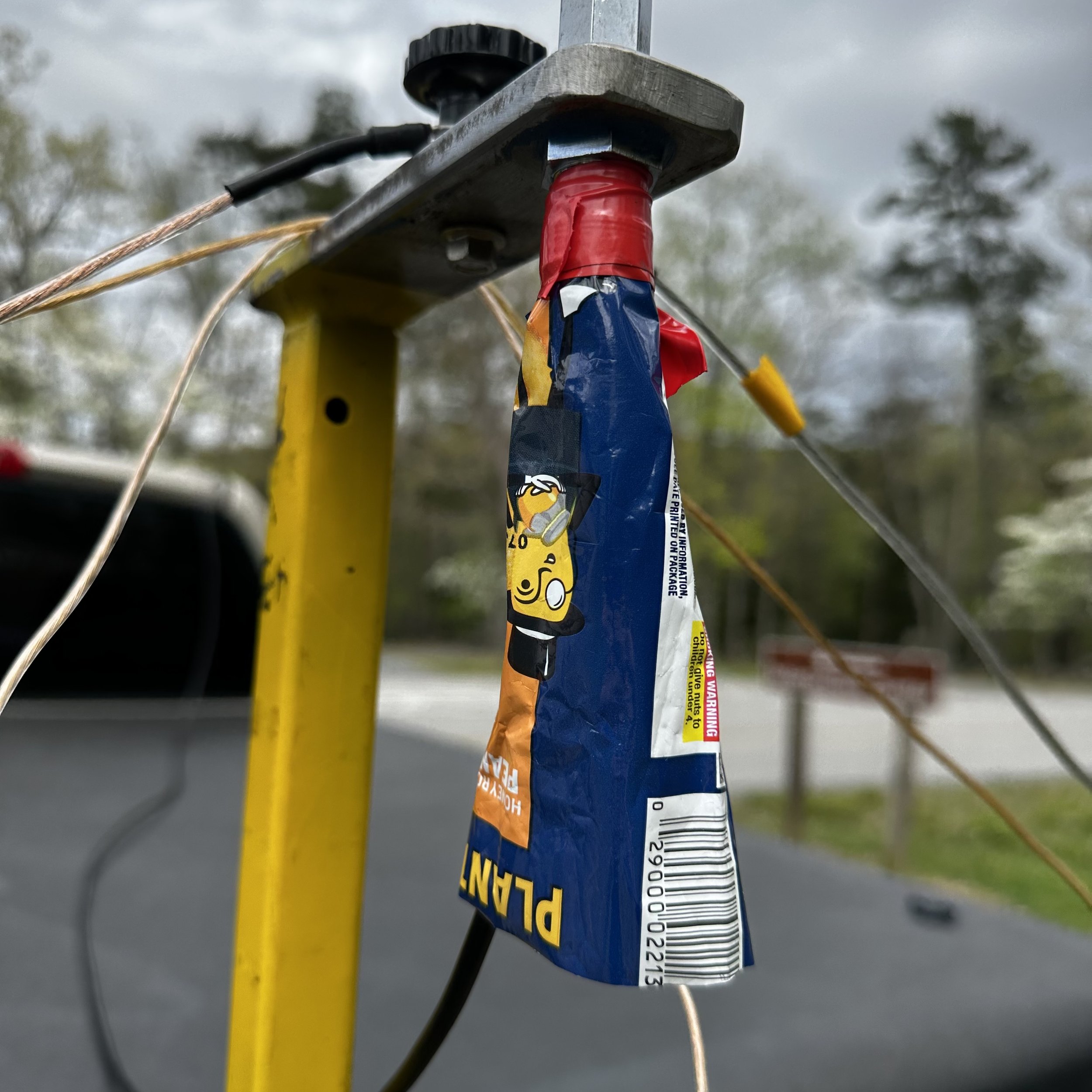
I also used my RG-316 coax today along with my rain proof “countermeasures” which consist of a peanut bag taped over the coax connector to keep it dry during the activation. This is a field expedient solve that also happens to be a way to recycle a common piece of trash that would otherwise end up in the landfill. I can even reuse the tape a couple of times if I am careful.
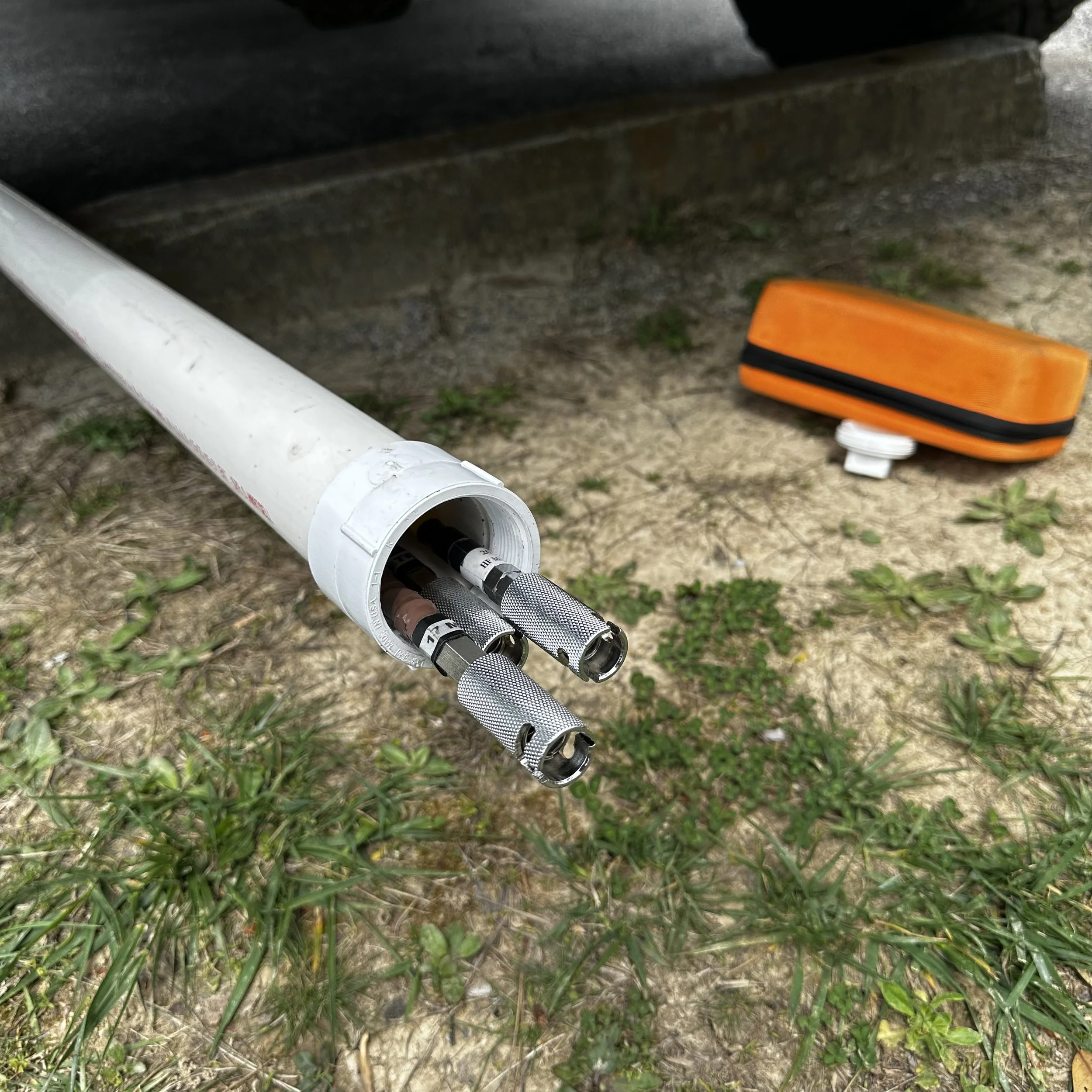
Since I connected all my radials today, I also tried to use the whole suite of antennas that I have currently. If you will look closely, you will se I also installed QD mounts on my hamsticks as well. This made band changes so much faster!
I figured I would start on 17 meters to see what I could hear up there. When I connected it and saw the radio, I had high hopes as the waterfall on the Icom IC-705 had several signals on it. Calling CQ almost immediately netted 2 dx contacts! I worked DL1AX in Germany and SP9RXP in Poland! Did I mention I am only using 5 watts?!?! SP9RXP is 5060 miles from K-2169 so that qualifies for the 1000 miles per watt award! One day I will actually apply for these… HIHI I attribute this entirely to the new common mode choke I made and was using and a nice little band opening that happened at the same time. The choke probably didn’t have much of an impact on this but I want to believe it did.

This choke works so much better than my other one that it isnt even a real comparison. It also seems to help with band noise, but that could just be me wanting to believe it does since I built it more than anything. I know it measures real good on the nanoVNA… lol
While I was on 20 meters this camper van rolls by real slow, I tend to get that a lot with all the radials and the hamstick on the back of the truck. Then the camper van stops right in front of me and the guy gets out and starts over my way. I also get this a lot as people are curious and want to know what I am doing. But then it takes a completely different direction when he says (I am paraphrasing a little here) “Are you doing Parks on the Air?” This caught me off guard as I had never had someone who knew what I was doing, actually ask me if that was what it was.

Turns out this camper was none other than W5DXQ on vacation! He is from Texas and is very active on the air using an assortment of modes. I was in the middle of a QSO so I asked him to let me clear it then we proceeded to talk for about 20 minutes about my rig and CW and digital modes and how he uses the spotter system and SSB and the list goes on and on. Meeting Jeff was the highlight of the activation…well that and working two dx stations right out of the gate on 17 meters… It was awesome to finally meet someone else who does POTA at a park. I am so glad he decided to stop and ask what I was doing. I hope to work him on the air at some point! Now the challenge for me is to meet someone actually activating like Jeff did when he found me today.
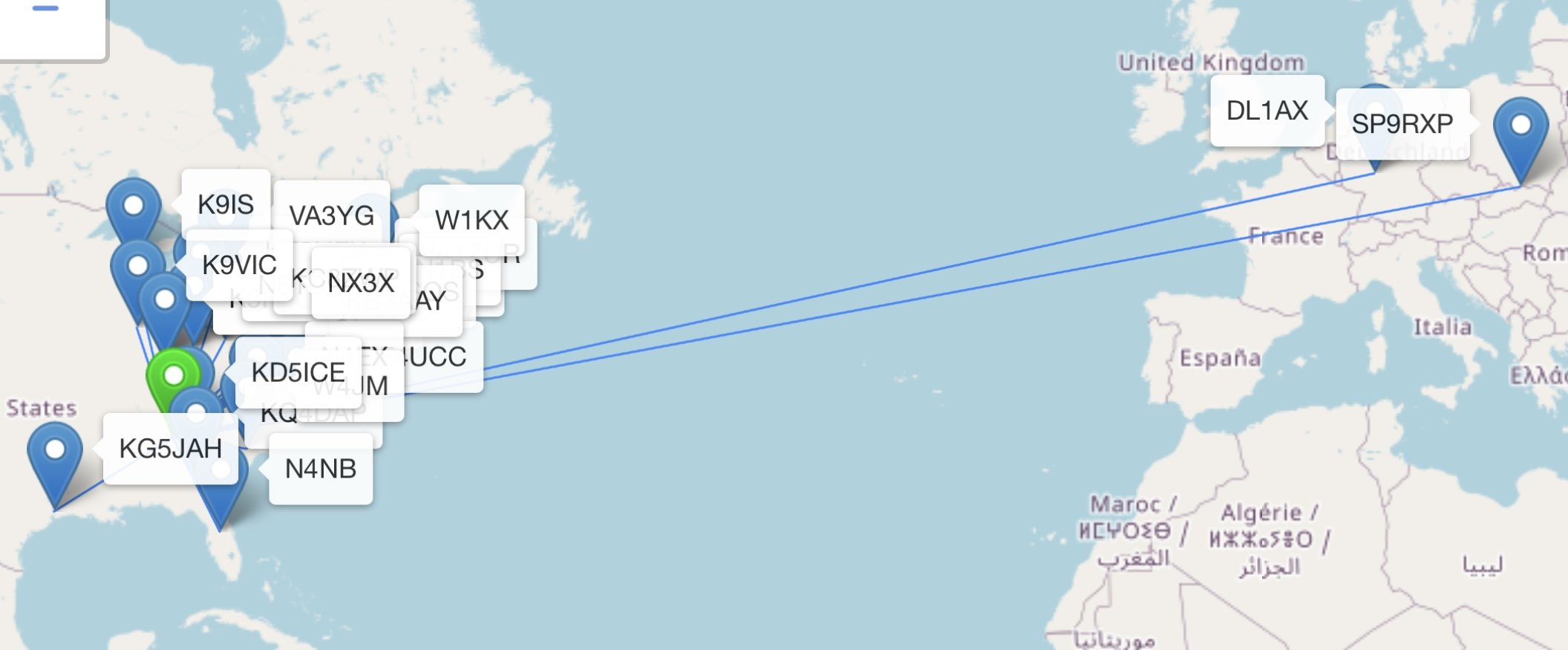

Once we finished our eyeball QSO he headed off on his adventure and I got back on the air. Looking at the QSO map, it looks really odd with the two european stations when compared to the North American dispersion that happened once the band opening closed on 17 meters. I normally net at least a few western states but today saw no one west of Texas.
As you can see from the logbook, today 30 and 20 meters were the bands to use but even then the reports were showing how the bands were fading in and out. I did make some contacts on all four bands though so I am super happy with that.


The peeps over at the POTA website even sent me this cool certificate to commemorate the 80th activation! Nice!

All in all, it was a great day for POTA. I hope to hear you on the air soon. 72 de WK4DS
One of the reasons I like POTA
The first picture is one of the main reasons I like POTA. Being out in the field with a portable radio and being able to make a reliable contact with it is just special to me.

The parking lot was almost full when I arrived and fortunately for me, the space I wanted was open! That is me all the way over to the left at the end of the row. The perfect spot to be if others are in the lot as there is no trail here so no one will be tripping over the antenna parts when the come and go.

Today I found I had about an hour of free time and the weather was perfect for a change so I gathered up the gear and went to K-2169 for a quick activation. Since the weather was so nice I opted to setup on the tailgate.
When I operate at home, I am in my “shack” which is actually a spare bedroom I have repurposed for my hobbies. That is the one thing I like and don’t like about it. It is indoors. I like it when it is raining or cold outside but I don’t like it when it’s nice weather outside. This is the biggest reason I like going to Field Day in June, that is second only to the camaraderie with the other people.

Today, since I wasn’t in my regular truck (I commandeered one of my shop trucks while they put new shoes on the dodge) I didnt have my usual antenna kit. So today I deployed the 41’ random wire antenna that I used in Hawaii. I also coupled it to my Icom IC-705 with the automatic antenna tuner as well. This makes band changes a breeze…

I threw a line over a tree beside the truck and pulled the wire up as high as I could and tied on a 13’ counterpoise. The tuner connects to the radio with two cables, a co-ax transmission line and a signal/control cable that is simple a 3.5mm stereo cable commonly referred to as a “AUX” cable. It has two AA batteries in it and works fine with these but if possible I will power it with the main battery I feed the radio with, so I also included a power cable in my harness I made up for it. This harness is 6’ long and allows me to connect random wires right to the tuner.

To lift the burden of the wire tension off of the tuner, I also have a small cord connected to the radio end of the 41’ wire so I can anchor it to something near the tuner. This works really well and keeps me from pulling the tuner off the table when something moves the wire like wind, squirrels or people which in turn would cause damage to my tuner.
Today was a pretty good day too, I got my activation in a fairly short amount of time, I was outside in the wonderful weather and I was able to just play radio a little while. That being said, I netted less than 20 QSOs today with signal reports showing I was not very strong…probably because the wire was poorly deployed and not even all the way.

The key of choice today was once again the Gemini I picked up off of eBay a while back. I have ran into two problems with it since getting it. I also use it a lot as it has a great feel and normally works very well. Issue number one is detailed in a previous blog post where I bumped the lever arms at some point and this shifted the action off center causing it to send dits nonstop. I dismantled the key and realigned the lever arms, which is really easy once you see what needs to be done. The second happened just the other day during an activation. I got all setup and started to call QRL and it was just sending trash. I couldn’t get it to send anything correctly at all, just a mess of dits and dahs with no coherent outcome. So I fell on the backup, the N6ARA key and it saved the day. Once back home, I took the key apart to find that the center ground post that the contacts touch when keying, had worked loose and it was about to fall out. It has one small screw that holds it on the base plate and I simply tightened this screw and it was back in business. The lesson here is to have a spare key with you…fortunately I had one and was able to get the activation.

Looking at the map, we can see how the radiation pattern started about 700 miles away probably due to my terrible antenna deployment, but people were still able to hear me so that is all that mattered. lol…

Do you have any tales from the outer planets that relate to anything like what has happened here? If so, let me know in the comments. I look forward to working all of you on the air at some point.
72 de WK4DS